
Every homeowner with a septic system needs to know where the tank is located. This knowledge becomes critical the moment you need a pump-out, a professional inspection, or repairs to your drain field. Without knowing how to find your septic tank, you risk damaging it with heavy equipment, paying extra fees for the service company to locate it, or missing early warning signs of system failure. The good news is that locating your septic tank requires no special training and relies almost entirely on information that is either already in your possession or easy to obtain. This guide walks you through every reliable method, from checking property records to using a metal detector, so you can find your tank quickly and safely.
Why Knowing Your Tank Location Matters
Many homeowners go years without thinking about their septic tank location, and that is understandable when the system is working properly. However, the moment something goes wrong, you need to know where the tank sits on your property. A pumping service charges extra if the technician has to spend time searching for the tank, and those costs add up quickly. More importantly, if you are planning any landscaping, deck installation, pool placement, or driveway work near the tank area, damaging it accidentally creates a hazardous situation and expensive repairs.
Protecting the tank from surface activity is a key reason to mark its location clearly. Driving heavy vehicles over the tank, placing playground equipment directly above it, or even frequent foot traffic can compact the soil and stress the tank structure over time. Once you locate the tank, keep vehicles and heavy equipment away from the area. Share the location with any contractors you hire so they can plan their work accordingly. For a comprehensive overview of what is inside the tank and how it works, see our septic tank components guide.
Routine maintenance is far easier when you know exactly where your tank sits. Septic tanks require pumping every three to five years depending on household size and tank capacity, and the service technician needs to excavate down to the lid. If you can point them directly to the tank on your property diagram, the service visit takes less time and costs you less money. Proactive knowledge also helps you recognize problems early, such as a sunken area in the yard above the tank that might indicate soil settling from a慢 leak or structural issue.
Start With Property Records
The most reliable method for how to find your septic tank is to look at the official records that were created when the system was installed. Every septic system installation requires a permit and an as-built diagram that shows the tank size, location, depth, and the layout of the drain field lines. These documents are filed with your local health department or building permit office, and they are public records in most states. A simple phone call or in-person visit to the appropriate office is usually all it takes to request a copy of your septic system record.
When you receive the as-built drawing, review it carefully. The diagram should show your house from a top-down view, the location of the tank relative to the house foundation, the direction and distance of the inlet pipe from the house, and the layout of the drain field. The tank is typically drawn as a rectangle or oval with dimensions labeled. This drawing is precise enough to guide you directly to the tank location with minimal searching. Keep a copy in your home records folder so you do not have to request it again the next time you need the information.
If the original records have been lost or are unavailable through the local office, do not panic. Other methods described in this guide are effective at narrowing down the probable location. Some counties have digitized older records and made them searchable online, so it is worth checking your county health department website before assuming records do not exist. Even partial information from records can reduce the search area significantly. You can also check our septic system guide for general principles about tank placement that apply across most properties.
Look for Visual Clues in Your Yard
Even without official records, your yard often tells you where the septic tank is located through subtle but recognizable visual patterns. Over years of use, a buried septic tank influences the soil above it in ways that become visible on the surface. Learning to recognize these signs allows you to narrow down the search area considerably before reaching for any tools. These visual indicators are most pronounced in established yards where the system has been in place for many years.
The most common visual clue is a slightly sunken or depressed area in the yard. As soil settles over the years above the buried tank, it creates a subtle depression that is visible especially after rain when water pools in the low spot. This depression is different from general unevenness in your yard and is typically confined to a rectangular or oval shape that corresponds to the tank dimensions. Walk your property after heavy rain and look for areas where water collects in a consistent shape rather than draining away.
Grass color and growth rate also change above the tank. The soil above a functioning septic tank tends to be darker and greener because nutrients from effluent slowly migrate upward through the soil, feeding the grass roots. This effect is subtle but visible if you know what to look for, particularly during dry spells when the rest of the lawn shows stress but the patch above the tank stays greener. In winter, the same area may show faster snowmelt because the ground above the buried tank is slightly warmer than the surrounding soil.
Riser lids are another visual clue worth looking for. Many older septic systems have riser pipes that extend from the tank lid up to or near the surface, particularly in states where building codes now require them for easier access. If you see a small circular lid or cap in your yard that you do not recognize, it is very likely a septic riser. These lids are typically 12 to 24 inches in diameter and may be at or slightly below the surface. For more on septic tank components and what each part does, visit our guide to septic tank parts.
Trace the Main Sewer Line
Every septic tank receives waste through a single main sewer line that carries all wastewater from your house. This pipe exits the foundation wall at a specific location, and from there it travels in a straight or gently curved path to the tank. By finding where this pipe exits your house and measuring outward, you can predict the tank location with reasonable accuracy. This method works particularly well when combined with the visual clue search because the intersection of the probable pipe path and any visual depressions gives you a very small search area.
Start by locating the sewer line cleanout on the exterior of your house. This is typically a short vertical pipe with a threaded cap located near the foundation, often on the side of the house facing the yard where the tank is most likely to be. If you cannot find an exterior cleanout, check your basement or crawlspace for the main waste pipe and trace it to the point where it exits the foundation. The direction the pipe takes as it leaves the house tells you which side of the property to search. Septic tanks are usually installed 10 to 25 feet from the foundation, depending on the lot layout, soil conditions, and local code requirements for setbacks.
Once you have identified the probable path, walk along that line and look for the same visual clues described above. If you have a metal detector, sweep it along the path to pick up the signal from the tank lid or any metal components. Mark the spot with a stake or flag when you find a strong signal, then continue a few more feet in the same direction to confirm the shape and size of the response. A septic tank lid will produce a broad signal consistent with a rectangular or oval shape, while a metal pipe or fitting will produce a narrower signal. Understanding the drain field layout also helps because the inlet pipe from the house connects to one end of the tank and the outlet pipe continues from the other end toward the drain field.
Use a Metal Detector
A metal detector is one of the most effective tools for locating a buried septic tank because most tanks contain enough metal to produce a clear signal. Concrete tanks typically have metal reinforcement bars (rebar) grid embedded in the walls, and many tanks have metal lid covers or bolt-down hardware that makes them easy to detect. Polyethylene plastic tanks may have fewer metal components, but the metal inlet and outlet fittings at the pipe connections are usually detectable, and these fittings are located at the ends of the tank. Even if you cannot detect the tank body itself, you can often locate the pipe entry and exit points which mark the tank ends.
To search effectively with a metal detector, divide your probable search area into a grid pattern and sweep the detector slowly across each section. Move the detector in overlapping passes as if mowing your lawn, keeping the search coil 1 to 3 inches above the ground surface. Mark any spots that produce a strong signal with a flag, then continue searching the surrounding area to determine the full shape of the response. A single sharp signal usually indicates a small object like a pipe fitting, while a broad area of moderate signal strength spanning several feet suggests the reinforced concrete body of the tank.
When selecting a metal detector for this purpose, a standard mid-range model is sufficient for finding septic tank components. You do not need a high-end unit designed for finding gold nuggets or deep relic hunting. Look for a detector with a concentric or elliptical search coil in the 8 to 11 inch range, as these sizes offer good balance between depth penetration and ground coverage for this type of search. If you already own a detector, check the battery before heading outside and verify that it is functioning properly by testing it on a known metal object first. Once you have located the tank, our septic tank inspection guide explains what happens during a professional inspection visit.
Use a Soil Probe Carefully
A soil probe or ground probe is a long slender metal tool that you push into the soil to detect resistance changes and locate buried objects. It is a useful supplement to the metal detector method, particularly for tanks that have minimal metal components. The probe slides into the soil easily in most areas, but when it reaches a solid object like a tank lid or a pipe, the resistance increases noticeably and tells you something is below. Using a probe is faster than digging and far less disruptive to your yard than excavation.
To use a soil probe effectively, start at the most probable location based on your records and sewer line tracing and work outward in a grid pattern. Insert the probe vertically and push it into the soil using slow, steady pressure. When you hit something solid at shallow depth, stop and mark the spot. Do not用力drive the probe forcefully into the ground because if the object below is a concrete tank lid, forcing the probe against it can cause minor damage or push debris into the gap around the lid. The goal is to detect the object, not to penetrate it. Forcing the probe can also create a puncture path that allows surface water to migrate down toward the tank, which is undesirable.
Insert the probe no more than 12 to 18 inches per attempt to avoid going too deep and risking contact with the tank body or pipes at a wrong angle. The top of a properly installed tank should be within 12 to 24 inches of the surface in most regions, so anything deeper than that is less likely to be the tank lid. If you do not find solid resistance in your expected search area, expand the grid systematically until you have covered the full probable zone. Once you have located the tank using any of these methods, you can mark the location permanently and plan any needed service visits. You can read more about the inspection process in our septic inspection guide.
Always Call 811 Before Digging
Before you use a shovel, probing rod, or any tool that penetrates the ground, you must call 811, the national underground utility locate service. This free service marks all buried utility lines on your property including electrical, gas, water, sewer, and communications cables. Septic pipes are not always included in the 811 marking service because they are private infrastructure, but the other utilities absolutely must be marked before you dig to avoid serious injury and costly damage. In many states, failing to call 811 before digging is actually a legal requirement with potential fines for violations.
Call 811 at least two to three business days before your planned digging date to give the utility companies time to send a technician to mark the lines. The process is simple: dial 811 or use your state-specific 811 online request form, provide your address and the approximate location of the dig site on your property, and wait for the marks to be applied. Once the marks are in place, you will see colored flags or paint indicating each utility type. Keep in mind that the marks indicate the location of utility lines, not the septic system, and there is always some tolerance in the accuracy of the marks, so dig carefully near them.
Even when using a soil probe, the 811 call is essential because the probe can contact and damage buried utilities if used blindly. Some properties have multiple utility lines running through the same general area, including water mains, underground electrical conduit, and gas lines for appliances like pool heaters or outdoor grills. A soil probe that strikes an electrical conduit can transmit current to the surface and create a shock hazard. Respect the marks, maintain a safe working distance from them when probing, and always assume that any unmarked line could exist in the area you are searching. This is non-negotiable safe practice.
When to Hire a Professional
If you have tried the methods described above and still cannot locate your septic tank, or if you need the location confirmed for a real estate transaction or major construction project, it is time to call a professional. Septic service companies have specialized electronic locating equipment that can pinpoint the tank position and measure its depth accurately. This is the same equipment used during routine pumping calls, and the technician can usually locate and expose the tank lid in a single visit. The cost is typically added to your pumping bill, and it is money well spent when other methods have failed.
A professional can also assess the condition of the tank and its components during the locating visit, noting the lid condition, any visible cracks, the status of the inlet and outlet baffles, and the depth of the tank. This information is valuable for planning future maintenance and budgeting for eventual repairs or replacement. When you combine professional location with a thorough inspection, you get a complete picture of your septic system health in one visit. For an estimate on what inspection and pumping services cost, see our maintenance guide which covers scheduling, costs, and what to expect from professional service visits.
Another situation that warrants a professional is when you suspect the tank has been damaged or has developed a leak. If you smell sewage odors near the tank location, see very lush grass growth that suggests a leak near the surface, or notice slow draining throughout the house that persists after basic troubleshooting, do not probe the ground yourself. Call a licensed septic professional who has the equipment to assess the situation safely and determine whether the tank itself is the source of the problem or whether the issue originates in the drain field or inlet/outlet pipes. For more information about diagnosing septic problems, browse our septic problems section.
Related Articles
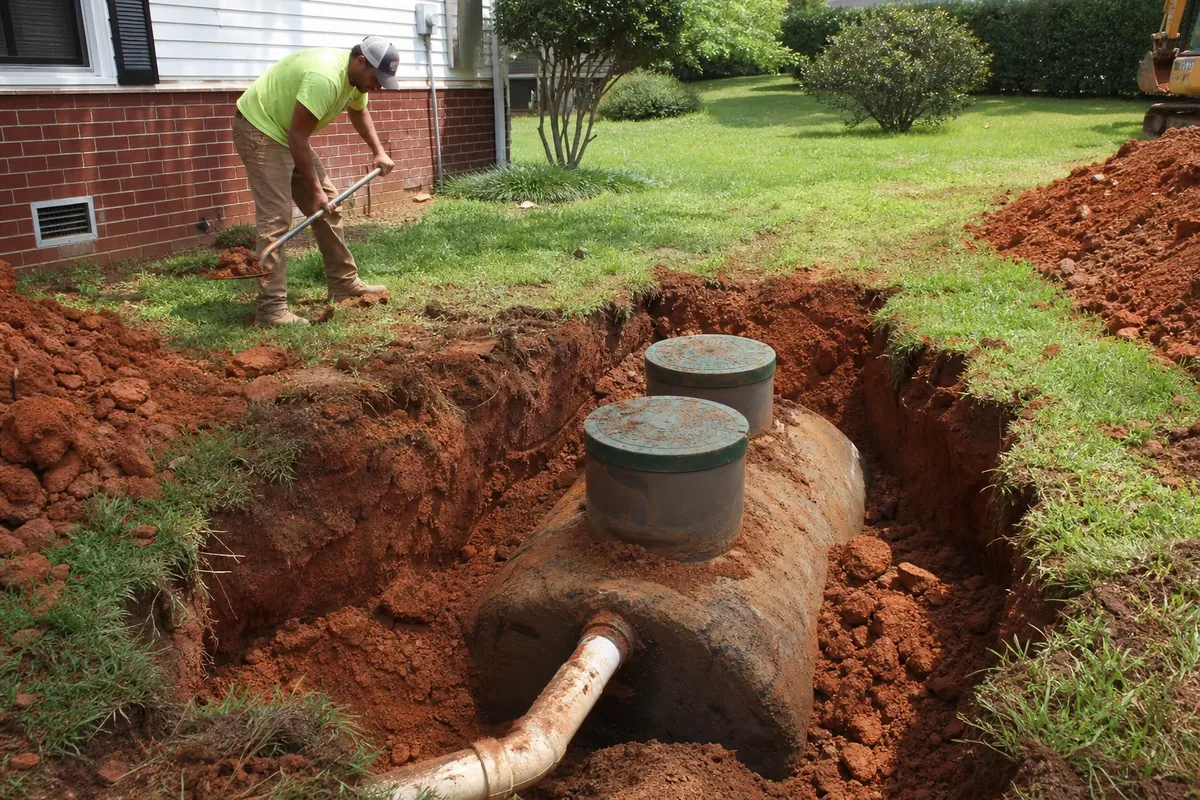
How Deep Are Septic Tanks Buried: What Lies Beneath Your Yard
Septic tanks are typically buried 6 inches to 4 feet underground depending on frost lines, soil type, and local code.
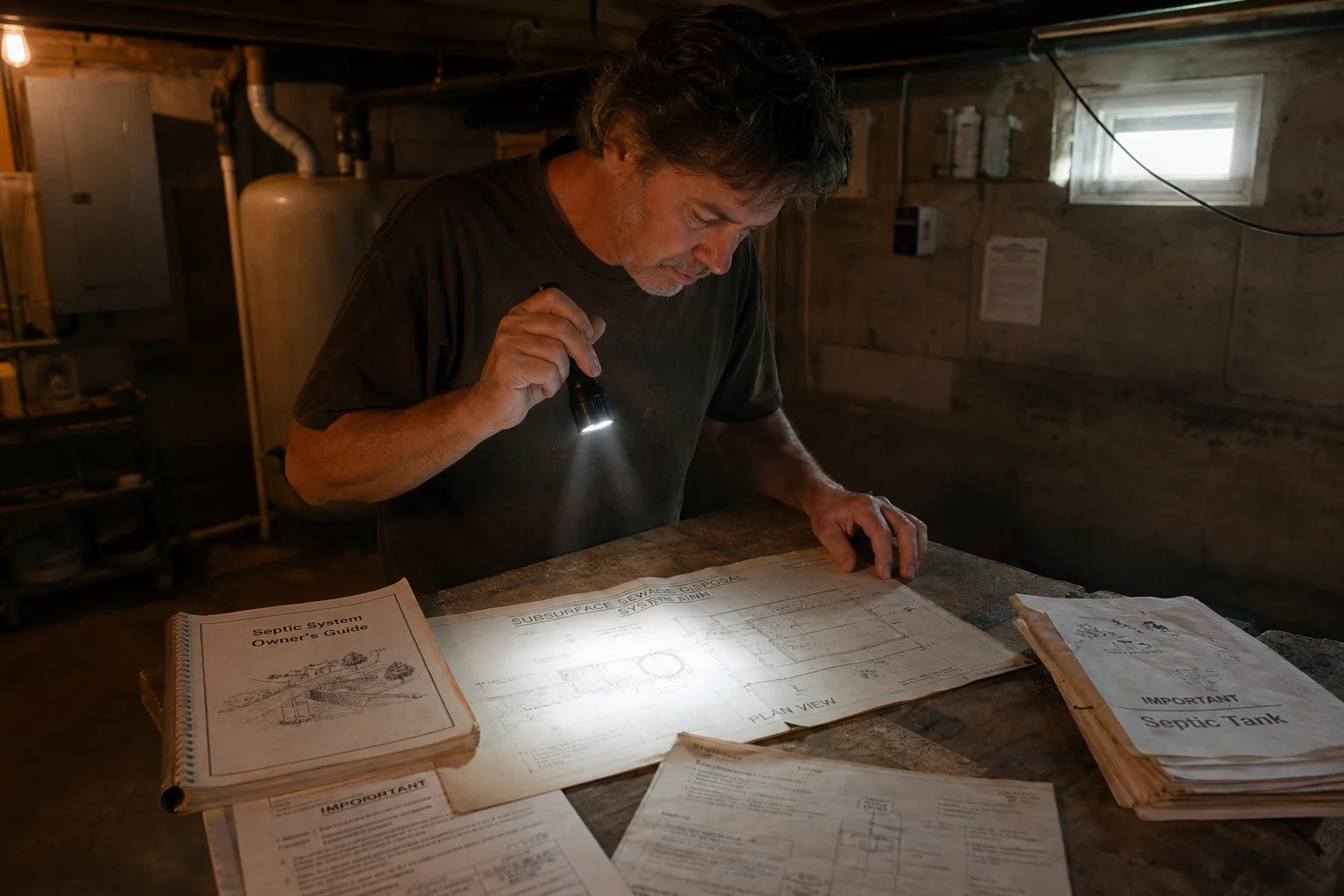
How to Locate Your Septic Tank: Proven Methods That Work
Property records, visual clues, and electronic locators all help find a buried septic tank.
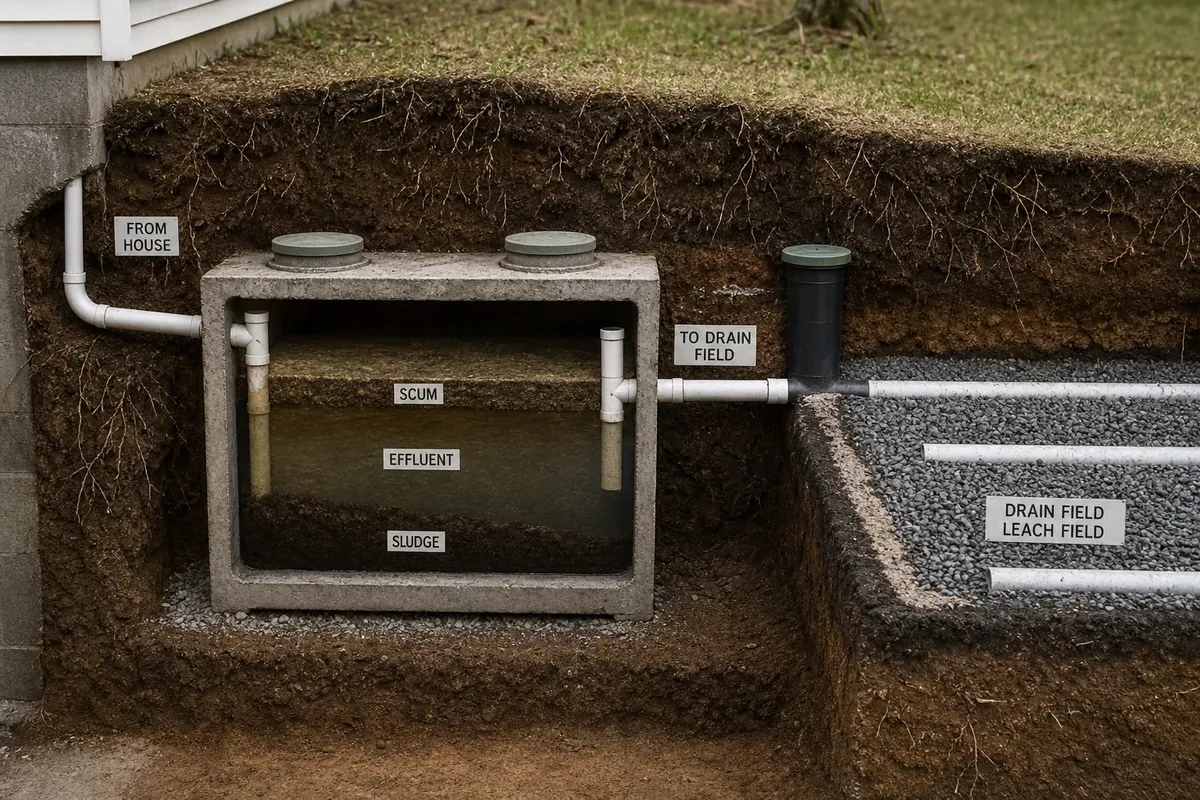
How Does a Septic Tank Work: The Complete Breakdown
A septic tank uses gravity and bacteria to separate solids, treat wastewater, and distribute effluent to your drain field.
External Resources
Frequently Asked Questions
What is the fastest way to find my septic tank without digging?
The fastest method is to contact your local health department or building permit office and request the original as-built diagram of your septic system. This official record shows the exact tank location and is the most reliable starting point. If that is unavailable, look for visual clues in your yard and use a metal detector to locate the lid.
How does tracing the main sewer line help locate my septic tank?
The main sewer line carries waste from your home to the septic tank. By finding where this pipe exits your foundation and following a straight outward path, you can narrow down the probable tank location. Tanks are typically installed in a straight line from the house at a distance of 10 to 25 feet from the foundation wall depending on soil conditions and local codes.
Can I use a metal detector to find my septic tank lid?
Yes. Most septic tanks have metal lids or reinforcement bars that a standard metal detector can detect through several inches of soil. Pass the metal detector slowly over the suspected area and mark any signals. Focus on the zone 10 to 25 feet from your foundation where the sewer line is most likely to reach the tank. Risers with metal covers are especially easy to detect.
What visual clues indicate the location of a buried septic tank?
Look for slightly sunken or depressed ground areas, darker or faster-growing grass patches caused by nutrient-rich effluent near the surface, patches where snow melts faster in winter, and areas where the lawn texture or color differs from the surrounding grass. These indicators develop over years as the soil above the tank settles and receives different moisture and nutrient levels than the rest of the yard.
Is it safe to use a soil probe to find my septic tank?
Using a soil probe is generally safe when done carefully and shallowly. Insert the probe no more than 12 to 18 inches at a time to avoid damaging pipes or the tank itself. If you hit something solid before reaching that depth, stop and mark the spot. Never dig or probe deeply without first calling 811 to have underground utilities marked. A probe is a detection tool, not an excavation tool.
Why is it important to know where your septic tank is located?
Knowing your septic tank location is essential for routine pumping and maintenance, diagnosing system problems, protecting the tank from surface traffic and heavy equipment, and ensuring you do not accidentally damage it during landscaping or construction. Many homeowners discover they need this information only when a problem arises, which is why locating it proactively saves time, money, and frustration.
Written by Mike Henderson
Mike Henderson is a certified septic system inspector with over 18 years of hands-on experience in wastewater management across Florida and the southeastern United States. He holds certifications from the National Association of Wastewater Technicians and regularly consults homeowners on preventing costly septic failures. His work has been referenced by regional health departments and home inspection agencies.