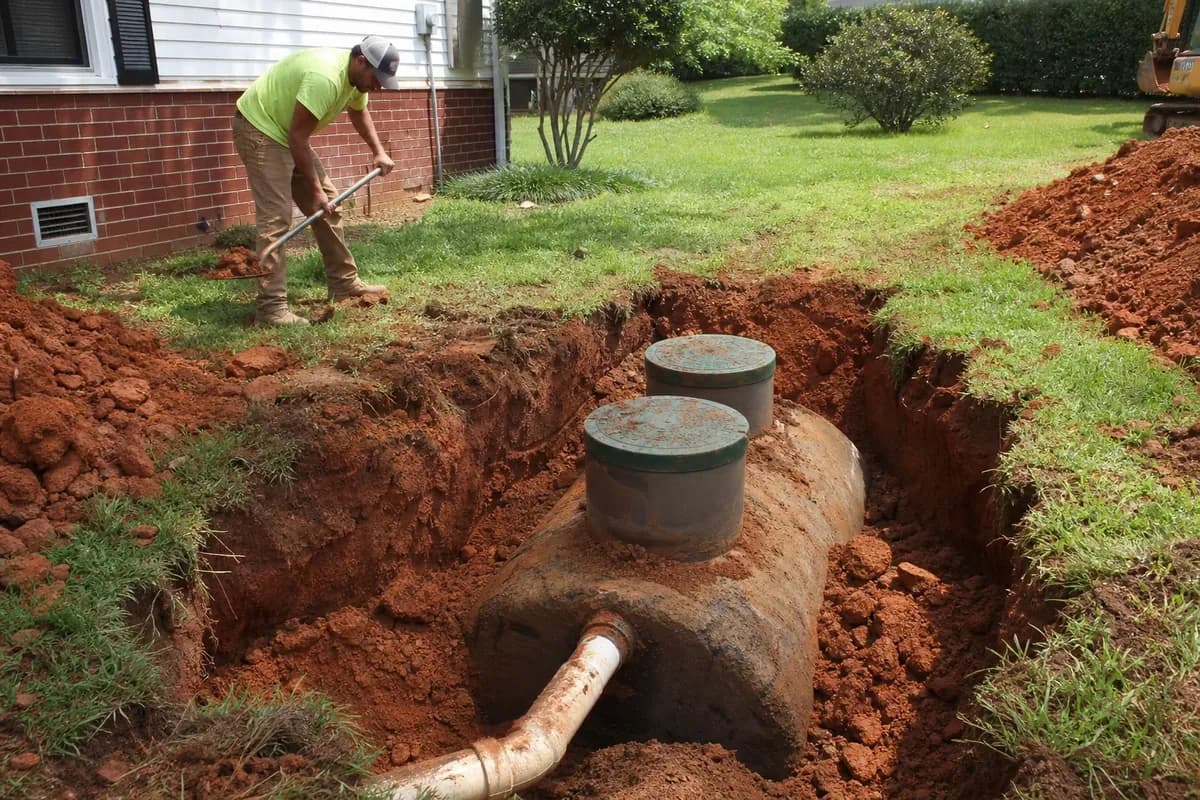
If you own a home with a septic system, you have probably never thought much about how deep the tank is buried. That changes the moment you need to pump the tank, repair a broken component, or investigate a problem with your drain field. Knowing how deep are septic tanks buried helps you understand your system, communicate accurately with service professionals, and make informed decisions about maintenance and repairs. The short answer is that septic tanks are buried between 6 inches and 4 feet underground, but the real answer depends on several regional and design factors that every septic homeowner should understand.
The Typical Depth Range Explained
The question how deep are septic tanks buried does not have a single answer because no two properties share identical conditions. The broadest range you will encounter in practice is 6 inches to 4 feet of soil covering the top of the tank. Most residential septic tanks in the United States fall somewhere between 12 inches and 3 feet deep. This range accommodates the most common factors that influence burial depth while remaining practical for excavation when service is needed.
At the shallow end of the range, tanks serving homes in warm climates with sandy well-draining soils may sit just 6 to 12 inches below the surface. These installations rely on the fact that the ground rarely freezes and the soil provides adequate support and drainage without requiring deep burial. At the deep end, tanks in northern states with dense clay soils and frost lines that penetrate 3 to 4 feet into the ground must be buried well below that mark to prevent freezing and structural stress.
The tank material itself also plays a role in determining appropriate depth. Concrete tanks are heavy enough to resist buoyancy and can be buried quite deeply, but they are also susceptible to cracking under extreme pressure at great depths. Polyethylene plastic tanks are lighter and easier to install but require more careful consideration of backfill pressure and load distribution. Your installation professional will select burial depth based on both the tank material and the site conditions.
Why Frost Lines Matter
The frost line is the deepest point to which ground soil is expected to freeze during the coldest winter months. It is the single most influential factor in determining how deep are septic tanks buried in northern climates. When water inside the inlet and outlet pipes freezes, it expands and can crack the pipes or create blockages that send sewage back into the home. Burying the tank and its connecting pipes below the frost line prevents this type of failure entirely.
Frost line depths vary dramatically across the country. In southern Florida and Texas, the frost line may be 0 inches or only a few inches because freezing temperatures are rare. In Minnesota, North Dakota, and parts of New England, frost lines regularly reach 4 to 5 feet below the surface. Building codes in these northern states typically require septic tanks to be buried at least 12 to 18 inches below the frost line to provide a safety margin. This means a tank in Minnesota might be installed at 5 feet deep while an identical home in Georgia might have the same tank buried at only 18 inches.
The consequences of ignoring frost line requirements are serious and expensive. A tank buried above the frost line can freeze solid during an extended cold snap, rendering the entire septic system inoperative until the ground thaws. In some cases, the freeze creates enough pressure to crack concrete tanks or dislodge pipe connections, requiring emergency excavation and repairs that cost thousands of dollars. Always verify local frost line requirements before any new septic installation.
Soil Type and Site Conditions
Soil composition determines how easily water moves through the ground and how much weight the soil can bear around the tank. In areas with sandy or gravelly soils, effluent from the drain field disperses quickly and the soil provides good structural support, allowing for shallower tank burial in many cases. Sandy soils also drain well and reduce the risk of water pooling around the tank, which can cause premature concrete degradation.
Clay soils present the opposite challenge. Clay is slow to drain and can retain water for extended periods, creating hydrostatic pressure around the tank. In clay-heavy areas, tanks are often buried more deeply to reach soil strata with better drainage characteristics and to ensure the drain field has adequate separation from the water table. The percolation rate of your soil, measured during the original site evaluation, directly influences the engineering design and burial depth of your system.
The water table level is another critical site condition. If the water table is high on your property, installing the tank too shallowly can result in groundwater infiltration into the tank, which overwhelms the system and sends solids into the drain field. A professional site evaluation measures the seasonal high water table and designs the system depth accordingly, sometimes placing components higher or deeper than the standard range to accommodate site-specific constraints. You can learn more about how these evaluations work in our septic system guide.
Regional Variations Across the United States
If you ask how deep are septic tanks buried in Florida versus Montana, you will get two entirely different answers because regional climate and regulatory requirements shape every aspect of septic system design. Understanding these regional patterns helps you set realistic expectations and ask informed questions when working with septic professionals.
In the Southeast and Gulf Coast regions including Florida, Georgia, Alabama, and South Carolina, mild winters and warm temperatures mean frost lines are rarely a concern. Tanks in these states are typically buried 12 to 24 inches deep. However, the high water table common in coastal areas often requires special design considerations, and some systems use above-ground mounds or pump stations to address drainage challenges. The Florida Keys and other low-lying coastal areas may have unique requirements dictated by local environmental regulations.
In the Midwest and Mountain West states such as Iowa, Kansas, Colorado, and Utah, frost lines range from 24 to 48 inches depending on elevation and latitude. Tanks are commonly buried 30 to 48 inches deep in these regions. Rural properties with private septic systems must comply with state health department regulations that specify minimum burial depths, setbacks from wells and property lines, and drain field sizing requirements that vary by state.
In northern New England and the Upper Midwest, including Maine, Vermont, New Hampshire, Minnesota, and Wisconsin, frost lines can exceed 60 inches in the coldest areas. Tanks in these regions are frequently buried 4 feet deep or more to ensure the inlet and outlet pipes sit safely below the freeze zone. These installations are more challenging and costly to service, which is why many homeowners in these regions install septic risers at the time of installation to make future pumping and inspection more accessible.
Why Septic Tank Depth Matters
The depth of your septic tank affects everything from system longevity to service costs to environmental safety. Understanding why depth matters helps you recognize problems early and communicate more effectively with septic professionals when maintenance or repairs are needed. Whether your tank is buried at 12 inches or 4 feet, each depth has distinct implications for your system.
From a structural standpoint, the soil above the tank provides load distribution that protects the tank from surface weight. Lawn mowers, tractors, parked vehicles, and even heavy foot traffic create pressure that transfers through the soil to the tank. A properly buried tank with adequate soil cover is shielded from this surface pressure. A tank buried too shallowly receives direct load stress that can cause cracks, warping, or joint separation over time. If you routinely drive vehicles or heavy equipment over your septic tank area, deeper burial or reinforced tank materials may be necessary.
Temperature regulation is another reason depth matters. Tanks buried at shallow depths experience greater temperature swings with seasonal air temperature changes. These fluctuations can affect the biological processes inside the tank, where anaerobic bacteria break down solid waste. While the bacterial populations in a well-established tank are quite resilient, extreme cold can slow their activity and extend the time between necessary pumpings. Deeper tanks maintain a more consistent temperature year-round, supporting steady and efficient waste decomposition. For more on maintaining healthy bacterial activity, see our guide to septic tank components and how they work.
Environmental protection is perhaps the most important reason burial depth is regulated. A septic tank and its drain field must be positioned deep enough to maintain adequate separation from groundwater and surface water sources. If the tank is buried too shallowly and the water table rises during wet seasons or heavy rainfall, there is a risk of untreated effluent escaping the system and contaminating nearby wells, streams, or aquifers. Local health departments set minimum depth requirements specifically to prevent this contamination risk.
How to Determine Your Tank Depth
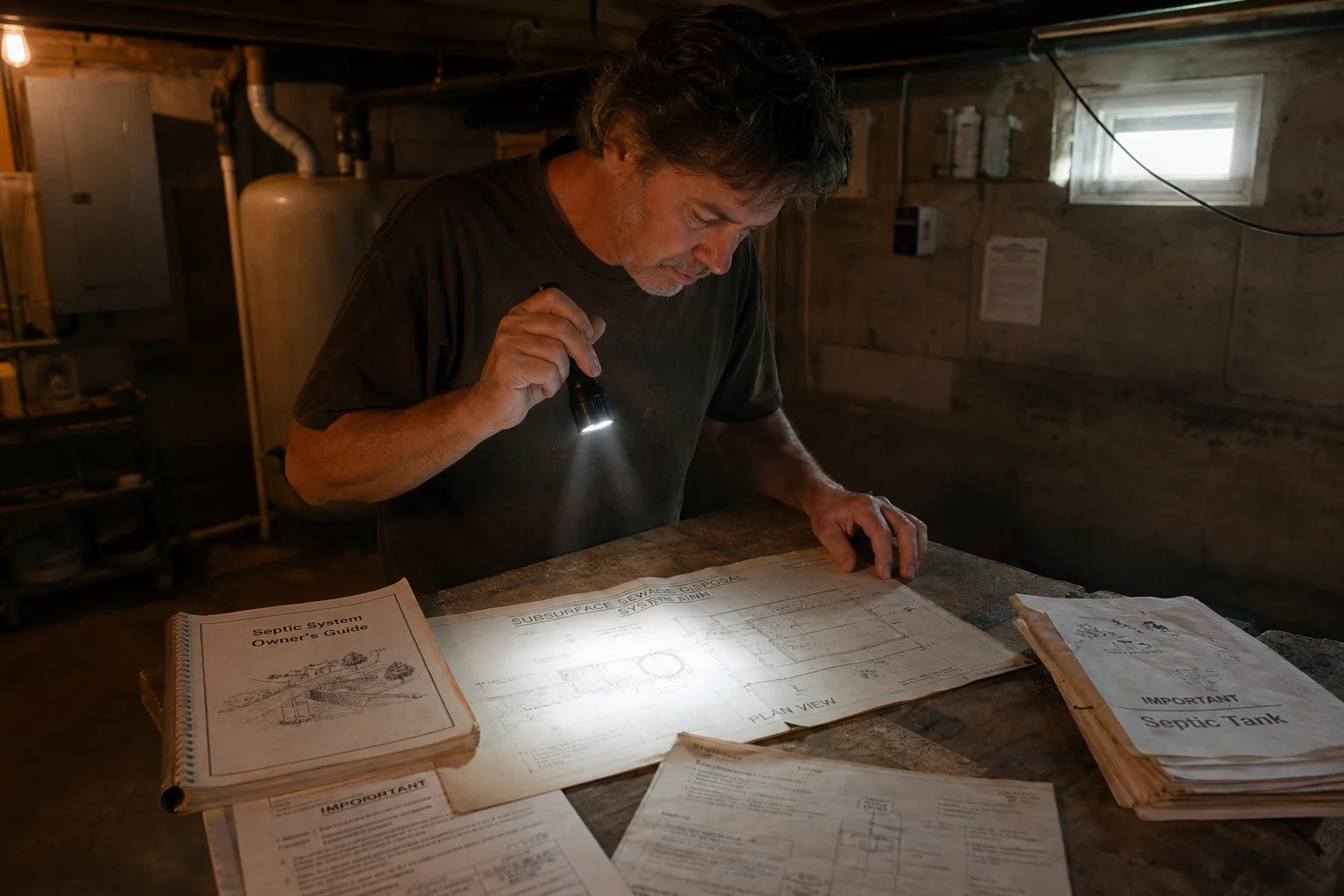
If you need to know how deep are septic tanks buried on your specific property, several approaches can help you find the answer without unnecessary excavation. The most reliable starting point is the original as-built diagram from your local health department or building permit office. When a septic system is installed, the installer typically files an as-built drawing that shows the exact location of the tank, its dimensions, and the depth at which it was installed. This document is public record in most states and can be obtained with a simple request.
If the as-built drawing is unavailable, you can look for visual clues in your yard. Septic tanks create subtle surface indicators over time, including slightly darker or greener grass patches where nutrients from effluent leak into the soil above. The ground directly over the tank may also be slightly depressed compared to the surrounding area because the soil settling over the years creates a mild depression. Snow often melts faster in winter directly over the tank because the buried structure is marginally warmer than the surrounding soil.
Professional septic service companies have electronic locating equipment that can pinpoint the tank position and measure the depth to the lid with specialized probes. This is the most accurate method and is typically included as part of a routine pumping service. If you are purchasing a new home with a septic system, a professional inspection should include depth measurement and a comparison against current code requirements. For detailed information about what a thorough inspection covers, read our article on septic tank inspection procedures.
Warning Signs of Incorrect Depth
Several symptoms may indicate that your septic tank was installed at an incorrect depth, either too shallow or deeper than necessary for your site conditions. Recognizing these signs early can prevent costly failures and environmental contamination. Problems with depth are not always obvious at first glance, but they produce recognizable patterns in system performance and visible changes in your yard.
If your tank is too shallow, you may notice the ground above it eroding or compacting unevenly underfoot. Lawn mowing over a shallow tank can be risky because the blades may strike concrete if the cover is not sufficiently thick. In extreme cases, you might see actual cracking or heaving of the soil directly above the tank area. Tanks that are buried above the frost line in cold climates may experience frozen inlet pipes during winter, presenting as a sewage backup that occurs only during the coldest months.
If your tank is buried excessively deep, you may face higher service costs every time the tank needs pumping because the technician must excavate down to reach the lid. In some cases, deeper burial can cause drainage issues if the tank outlet is too far below the drain field inlet, creating an incline that slows effluent flow and allows solids to settle in the pipes. An excessively deep tank can also make it harder to inspect the baffles and interior components that prevent solid waste from reaching the drain field.
Any sign of surfacing effluent, lingering sewage odors in the yard, or unusually lush grass growth over a specific area should prompt a call to a septic professional immediately. These symptoms can indicate a variety of problems including incorrect depth, tank cracks, drain field failure, or hydraulic overload, and they should be diagnosed by a qualified inspector before they escalate. For guidance on regular maintenance that catches these problems early, see our septic installation and sizing guide.
DIY Versus Professional Excavation
When your septic tank requires service and the lid is buried deeper than a few inches, you face a choice between professional excavation and attempting to dig down to the tank yourself. While the DIY approach might seem like a way to save money, there are important practical and safety considerations that make professional excavation the clear choice in most situations.
Professional excavation ensures that the work is done safely and without damage to the tank or its connecting pipes. Septic tanks are structural vessels and they can be damaged by improper excavation techniques. Using heavy equipment near the tank without knowledge of its exact location and condition risks cracking the tank walls, dislodging the inlet or outlet connections, or compromising the seal around the lid. Professional contractors carry general liability insurance that protects you financially if something goes wrong during excavation.
Professional septic service companies typically include excavation in their pumping quotes, charging an additional fee based on the depth and the type of equipment required. In many cases, they can complete the excavation and pumping in a single visit, backfilling the hole and restoring the surface afterward. If you have a septic riser installed, excavation becomes unnecessary for all future services, which is why risers are strongly recommended for tanks buried deeper than 18 inches.
If you do choose to excavate yourself, never enter the tank under any circumstances. Septic tanks contain toxic gases including methane, hydrogen sulfide, and carbon dioxide that can kill a person within minutes of exposure. The tank interior must never be entered without proper gas monitoring equipment, respirators, and a partner standing by at the surface. Even brief exposure to these gases causes disorientation, unconsciousness, and death. Leave all interior work to licensed septic professionals who are trained and equipped for confined space entry.
Related Articles

How to Find Your Septic Tank: Complete Location Guide
From reading property records to using a soil probe, this guide covers every method for locating your septic tank.
How to Locate Your Septic Tank: Proven Methods That Work
Property records, visual clues, and electronic locators all help find a buried septic tank.
How Does a Septic Tank Work: The Complete Breakdown
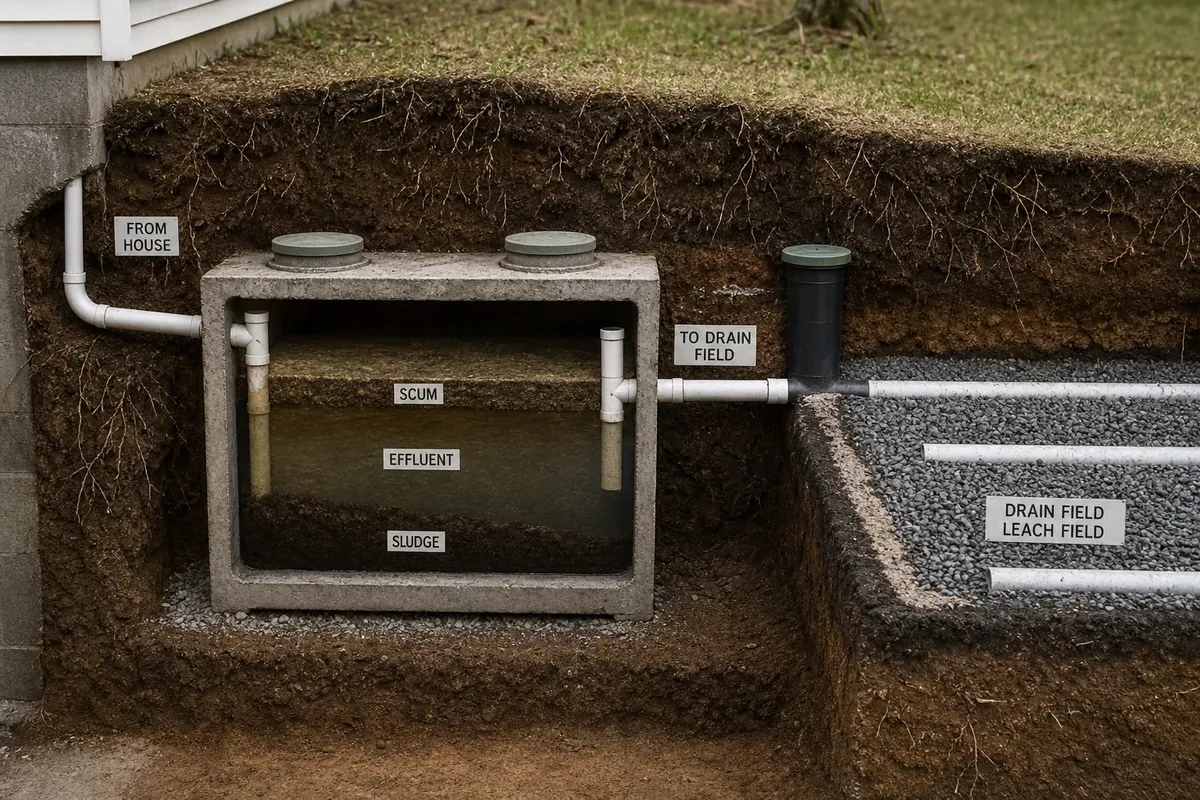
A septic tank uses gravity and bacteria to separate solids, treat wastewater, and distribute effluent to your drain field.
External Resources
Frequently Asked Questions
How deep are septic tanks buried on average?
Septic tanks are typically buried between 6 inches and 4 feet underground. The exact depth depends on local frost lines, soil conditions, building codes, and the type of system installed. In warm southern climates, tanks may sit just 6 to 12 inches below the surface. In northern regions with deep frost lines, tanks are commonly buried 3 to 4 feet down.
What determines how deep a septic tank must be buried?
The three primary factors that determine burial depth are local frost line depth, soil type and permeability, and municipal building codes. Frost lines in northern states require tanks to be buried below the deepest expected ground freeze. Sandy well-draining soils may allow shallower installations while clay soils often require greater depth. Always check your local health department or building authority for specific code requirements.
Can a septic tank be buried too shallow?
Yes. A septic tank buried too shallow is vulnerable to physical damage from lawn equipment, foot traffic, and vehicle weight on the surface above. Shallow tanks also receive more direct sunlight and temperature fluctuation, which can accelerate concrete degradation and disrupt the biological processes inside the tank. Most codes require a minimum of 12 to 18 inches of soil cover over the tank.
How do I find my buried septic tank without digging?
Start by contacting your local health department or building permit office for the original as-built diagram of your septic system, which typically shows the tank location and depth. You can also look for visual clues in your yard such as darker grass patches, slightly depressed ground, or areas where snow melts faster in winter. A professional septic service company can locate the tank using a metal probe and electronic locating equipment.
Does burial depth affect how often I need to pump my septic tank?
Burial depth itself does not directly change pumping frequency, but deeper tanks are less accessible and typically more expensive to pump because the service company may need to dig down to reach the lid. Tank depth also affects temperature inside the tank, with deeper tanks staying cooler year-round, which can slow bacterial activity slightly. Pumping frequency is primarily driven by household size, tank capacity, and water usage habits.
What happens if my septic tank is buried below the frost line in winter?
When a septic tank is properly buried below the local frost line, the ground surrounding it acts as insulation and prevents the tank and its contents from freezing even during the coldest months. If a tank is installed too shallow in a cold climate, the inlet and outlet pipes can freeze solid, causing sewage to back up into the home. This is why building codes in northern states mandate burial depths that exceed the expected frost penetration depth.
Written by Mike Henderson
Mike Henderson is a certified septic system inspector with over 18 years of hands-on experience in wastewater management across Florida and the southeastern United States. He holds certifications from the National Association of Wastewater Technicians and regularly consults homeowners on preventing costly septic failures. His work has been referenced by regional health departments and home inspection agencies.