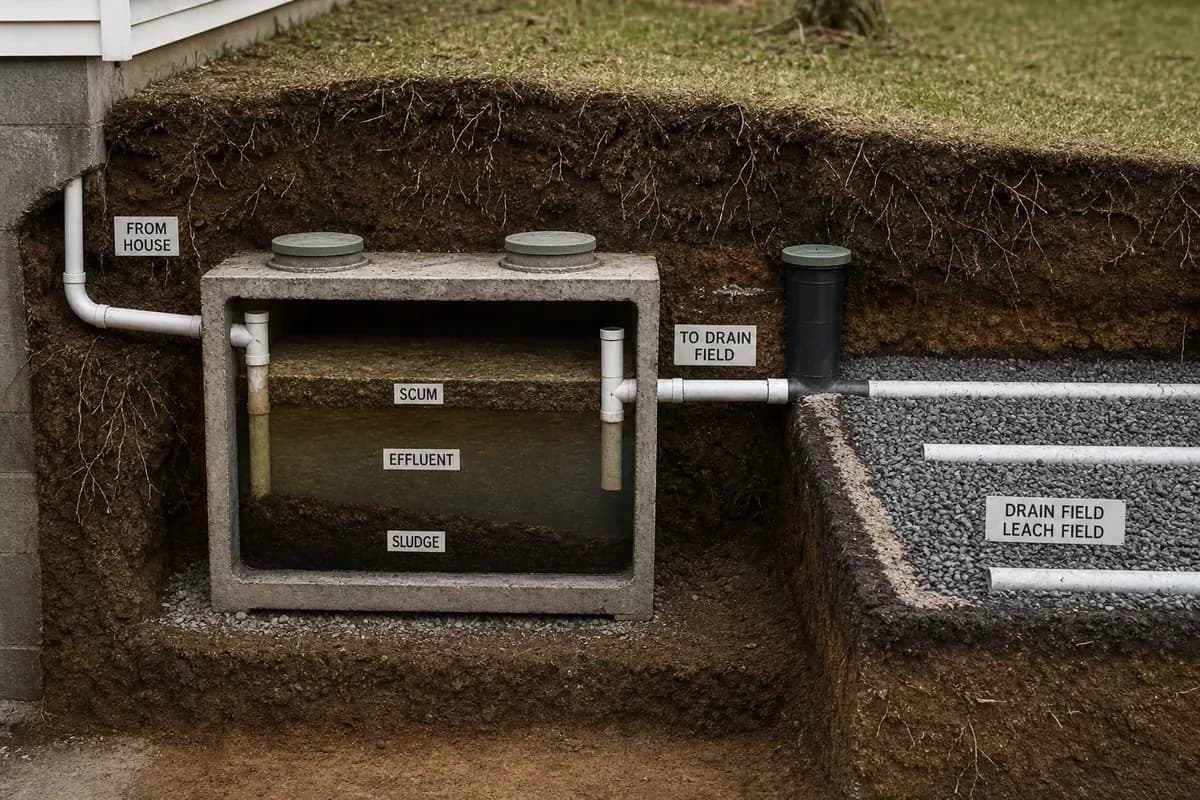
Understanding how a septic tank works is essential knowledge for every homeowner whose property relies on an onsite wastewater treatment system. Unlike municipal sewage systems that transport waste to centralized treatment facilities, a septic system treats wastewater on your own property through a carefully engineered combination of gravity, biological processes, and natural soil filtration. This guide walks through every stage of that process in detail so you can maintain your system effectively and recognize problems before they become expensive emergencies.
Homeowners Are Ditching Pumping Trucks After Seeing This
Watch this short video to discover the unusual method homeowners are using to dissolve solid waste, destroy foul odors, and keep drain fields flowing freely. No harsh chemicals. No service calls. It takes seconds and works while you sleep.
Watch the Free Video NowGravity-Fed Flow From Your House: The Journey Begins Underground
Every drop of wastewater that leaves your home begins its journey through the septic system without any mechanical assistance. The building sewer pipe exits your house below ground level and slopes gently downward toward the septic tank, typically at a grade of one-quarter inch per foot. This slope is carefully engineered to allow wastewater to flow by gravity alone, which is why septic systems require no pumps, no electricity, and no motorized components for the initial stage of transport.
The pipe diameter is usually four inches, large enough to carry solid waste without clogging while maintaining a consistent flow velocity that prevents settling inside the pipe itself. As the wastewater travels from your house to the tank, heavier particles may begin to settle in the pipe, but the continuous flow from subsequent water use keeps the line relatively clear. Problems with the building sewer line such as root intrusion, pipe cracks, or settled sections that create low spots can disrupt flow and lead to backups, which is why the piping between your house and tank deserves attention during inspections.
One of the fundamental design principles of a conventional septic system is that it works entirely by gravity, which makes it remarkably reliable in areas with consistent topography. The entire system must be positioned so that the tank sits lower than the house, and the drain field sits lower than the tank. If your property lacks sufficient natural slope for this gravity flow, a pump chamber and effluent pump can be added to lift wastewater from the tank to the drain field, though this introduces mechanical complexity and dependency on electricity that a gravity system avoids entirely. Read our guide to septic system components to understand the full range of parts that make up a complete system.
The Critical Role of the Inlet Baffle: Controlling the Entry Point
When wastewater reaches the septic tank, it enters through a specially designed inlet baffle that performs several essential functions simultaneously. The baffle is a vertical or angled wall fitting that extends downward from the tank inlet pipe to a point below the liquid surface, typically reaching to within six to twelve inches of the tank floor. This positioning is not arbitrary: it directs incoming wastewater downward below the surface level of the tank to prevent the incoming stream from churning up and mixing with the scum layer at the top.
Without a properly functioning inlet baffle, the force of incoming water would create turbulence that breaks apart the scum layer and circulates floating solids into the effluent stream, carrying them directly toward the drain field where they would cause premature clogging. The baffle also helps direct the flow toward the center of the tank, giving wastewater the maximum possible contact time with the settling zone before it begins its slow movement toward the outlet. Inlet baffles can be made of PVC, concrete, or cast iron depending on the tank material and local code requirements.
Over time, inlet baffles can deteriorate, become dislodged, or be blocked by accumulated debris. A missing or damaged inlet baffle is one of the most common findings during a septic inspection and is a significant factor in premature drain field failure. Inspecting the inlet baffle during routine maintenance visits allows problems to be identified and corrected before they damage the drain field. If you are not sure what condition your inlet baffle is in, our inspection guide explains what professionals look for during a comprehensive septic assessment.
Three-Layer Separation Inside the Tank: The Core of Septic Function
Inside a properly functioning septic tank, a remarkable natural process unfolds that separates wastewater into three distinct layers based on density. Understanding these layers is fundamental to understanding how the entire system works, because each layer has different composition, behavior, and destination within the treatment process. The separation happens through gravity alone, without any mechanical components or chemical additives.
The top layer, called the scum layer, consists of materials that are lighter than water and therefore float rather than sink. This layer is composed of fats, oils, grease, soap scum, and lightweight solid waste that enters the tank from the building sewer. Because these materials float, they accumulate at the surface of the liquid where they form a mat that can be several inches thick in a tank that has not been pumped recently. This scum layer is not merely waste: it actually serves a beneficial function by creating a physical barrier that prevents odors from escaping and reducing the amount of oxygen that contacts the liquid below, which supports the anaerobic bacterial population that drives the digestion process.
The middle layer, called the effluent layer, is the partially clarified liquid that occupies the largest volume of the tank. This liquid contains smaller suspended particles, dissolved organic material, and bacteria that remain in solution as water flows through the tank. The effluent is the layer that will eventually exit the tank through the outlet baffle and flow to the drain field for further treatment. The quality of the effluent depends directly on how effectively the tank separates solids from liquid, which is why maintaining the integrity of the scum and sludge layers is so important to system performance.
The bottom layer, called the sludge layer, consists of heavy materials that sink to the tank floor by gravity. This layer includes inorganic particles such as sand, grit, soil, and cat litter, as well as dense organic material that has been partially broken down by bacterial digestion. The sludge layer accumulates gradually over time, and its depth is the primary indicator used to determine when pumping is necessary. As the sludge layer grows, it reduces the effective volume of the tank and eventually reaches a point where it can be drawn into the outlet pipe and carried to the drain field, causing serious damage to that critical component. Our pumping frequency guide covers how to monitor sludge depth and schedule service before problems develop.
Bacterial Digestion and the Anaerobic Ecosystem: Living Treatment Inside Your Tank
The septic tank is far from a passive container. It is a living biological reactor where billions of microorganisms continuously work to break down organic waste into simpler compounds. The primary organisms responsible for this digestion are anaerobic bacteria, which thrive in the oxygen-free environment of the tank and derive energy from the decomposition of organic material. These bacteria are not introduced by the homeowner through additives or treatments: they colonize the tank naturally from the incoming wastewater and establish stable populations within days of the system first receiving flow.
The bacterial digestion process reduces the volume of solid waste in the tank by converting a portion of the organic material into liquids, gases, and a more compact residue. The gases produced by anaerobic digestion, primarily methane and carbon dioxide, escape through the vent stack on your roof or are absorbed into the effluent stream. This biological activity is why a septic tank can operate for several years between pumpings in a typical household without becoming completely solid-filled, though the rate of accumulation always eventually exceeds the rate of digestion.
The bacterial population in a septic tank is sensitive to disruption from certain household chemicals, excessive hot water, and sudden changes in the composition of incoming wastewater. Harsh antibacterial cleaning products poured down drains can reduce the bacterial population and temporarily impair digestion, though the population typically recovers within days to weeks as fresh bacteria enter with normal household use. Very high volumes of bleach, drain cleaners, solvents, or petroleum products can cause more severe disruption and should be avoided or minimized in homes with septic systems. If you are looking for safe products to use with your system, our bacteria and enzyme guide covers what actually helps versus what harms the natural digestion process.
The efficiency of bacterial digestion depends on temperature, retention time, and the carbon-to-nitrogen ratio of the incoming waste. Tanks located in colder climates digest more slowly because bacterial activity decreases at lower temperatures, which is why northern systems may require more frequent pumping than southern systems with identical usage patterns. The retention time, or how long wastewater sits in the tank before exiting, is determined by the tank volume and the daily flow rate. Larger tanks and lower daily flows allow more complete digestion and better separation before effluent exits.
Outlet Baffle Function and Effluent Flow: The Gateway to the Drain Field
The outlet baffle sits at the opposite end of the tank from the inlet and controls what leaves the tank and enters the drain field. Like the inlet baffle, it extends downward from the tank ceiling to a point below the liquid surface, typically to within six to twelve inches of the tank floor. This positioning ensures that only the middle liquid layer can exit through the outlet pipe, while the scum layer above and the sludge layer below remain contained within the tank. The outlet baffle opening is typically smaller than the inlet opening, which helps maintain a slightly lower liquid level in the tank than the inlet level, creating a hydraulic gradient that promotes steady flow from inlet to outlet.
The primary function of the outlet baffle is to act as a filter that prevents large particles and the scum layer from escaping with the effluent. When solids do escape the tank through a damaged or missing outlet baffle, they accumulate in the drain field piping and gravel, gradually reducing the infiltration capacity of the soil and eventually causing system failure. Replacing a failed drain field costs tens of thousands of dollars, while replacing a damaged outlet baffle during a routine service call costs a few hundred dollars, which illustrates why baffle condition should never be neglected during maintenance.
The effluent that passes through the outlet baffle is not fully treated wastewater. It still contains dissolved organic compounds, suspended solids, bacteria, viruses, and nutrients that require further treatment. This partially treated effluent flows from the outlet pipe into a distribution box or directly into the drain field piping, where it is dispersed across a large area of soil for the final treatment step. The transition from tank to drain field is one of the most critical points in the entire septic system, because any solids that reach the drain field cannot be removed and will accumulate until they cause failure.
Drain Field Distribution and Soil Percolation: The Final Treatment Stage
The drain field, also called the leach field or soil absorption system, is where the final and most important stage of wastewater treatment occurs. After effluent leaves the septic tank through the outlet pipe, it flows into a distribution box that divides the flow equally among multiple drain lines, each of which contains perforated pipes laid in trenches filled with gravel or stone. The gravel serves as a structural medium that supports the perforated pipe while allowing effluent to flow freely out of the pipe openings and into the surrounding soil.
The design of the drain field is based on the principle of distributing effluent across the largest possible area of soil, because the soil itself is the final filter that removes contaminants from the wastewater. Each trench is typically three feet wide and filled with gravel to a depth of six to twelve inches, with the perforated pipe laid on top of the gravel bed. Effluent flows out of the pipe holes and percolates downward through the gravel and into the native soil, where it encounters the microbial community and chemical processes that complete the treatment process.
The number and length of drain field trenches is determined by the daily flow volume and the percolation rate of the soil, which is measured during the site evaluation that precedes system design. Soils with fast percolation rates require less total trench area, while slow-percolating clay soils require more area to handle the same daily volume. This is why drain field sizing is specific to each property and cannot be standardized across different sites. A professional installer or inspector will conduct a percolation test and soil analysis before designing the drain field to ensure it is appropriately sized for the expected hydraulic loading. Our drain field care guide provides detailed information on how these systems are sized and constructed.
The concept of daily hydraulic loading is critical to understanding how the drain field works. Each day, the household produces a certain volume of wastewater that must be absorbed and treated by the drain field. If the drain field is properly sized and the household water use remains consistent, the soil has time to absorb and treat each day's effluent load before the next day's volume arrives. Problems develop when water use increases beyond what the drain field was designed to handle, or when the soil becomes clogged with accumulated solids and can no longer absorb water at the designed rate. This is why water conservation is one of the most important maintenance practices for protecting the drain field.
How Soil Completes the Treatment Process: The Living Filter Beneath Your Yard
The soil in your drain field is not merely a passive medium through which wastewater passes. It is a complex living ecosystem that performs the majority of the pathogen removal and nutrient reduction that makes septic systems safe for the environment. When effluent percolates through the soil, it encounters an intricate network of soil particles, root channels, worm tunnels, and microbial communities that work together to remove contaminants from the water before it reaches groundwater or surface water bodies.
Physical filtration is the first mechanism of treatment: soil particles trap suspended solids and large particles as effluent moves downward through the soil profile. This physical filtration is most effective in the top few inches of the soil beneath the gravel trench, which is why maintaining the integrity of the soil structure over the drain field is so important. Compacting the soil with vehicles, building structures over the drain field, or allowing heavy equipment to drive over the area can destroy soil structure and dramatically reduce filtration efficiency.
Biological treatment is the second mechanism: the microbial community in the soil consumes organic compounds, bacteria, and viruses as a food source, breaking them down into harmless byproducts. This biological activity is most intense in the upper twelve to eighteen inches of soil where oxygen is present, which is why proper drain field design places the perforated pipe close enough to the surface to maintain aerobic conditions in the treatment zone. Chemical processes in the soil, including adsorption and ion exchange, remove dissolved compounds and nutrients from the effluent as it moves through the soil profile.
The effectiveness of soil treatment depends heavily on the type of soil and its structure. Sandy soils with large particle sizes percolate quickly but provide less surface area for biological and chemical treatment, which means they require more area to achieve the same level of treatment. Clay soils with small particle sizes provide excellent treatment through their high surface area but percolate very slowly, which limits how much effluent can be absorbed each day and may require larger drain field areas. The ideal drain field soil is a well-drained loam that combines adequate percolation rates with sufficient surface area for biological treatment.
The biomat is a naturally occurring layer that forms at the interface between the gravel trench and the native soil in a drain field over time. This layer is created by bacterial growth and accumulated fine particles that gradually reduce the percolation rate of the soil. In a properly designed and maintained system, the biomat reaches an equilibrium thickness where it continues to treat effluent effectively without becoming so thick that it blocks water movement. Excessive biomat accumulation is one of the primary causes of drain field failure and is most commonly associated with systems that receive hydraulic or organic loading beyond their design capacity. Our treatment overview covers the biological and chemical processes that support long-term drain field health.
Factors That Affect Septic System Performance: Variables Every Homeowner Should Understand
Multiple factors interact to determine how effectively your septic system treats wastewater and how long it will operate before requiring service or replacement. Understanding these factors helps you make informed decisions about system use and maintenance that can extend the life of your investment significantly.
Water usage volume is one of the most direct factors affecting system performance. The more water your household uses, the more frequently the drain field must absorb and treat effluent. High water use accelerates the accumulation of biomat in the drain field and can push the system beyond its hydraulic design capacity, leading to surfacing effluent, slow percolation, and eventual failure. Implementing water conservation practices such as fixing leaky faucets promptly, installing high-efficiency fixtures, spreading laundry loads throughout the week rather than doing multiple loads in a single day, and taking shorter showers all reduce hydraulic loading and extend drain field life.
The composition of waste entering the system significantly affects both tank and drain field performance. Garbage disposals are a particularly significant factor because they grind food waste into fine particles that remain suspended in the effluent rather than settling in the tank. These particles flow to the drain field and contribute to biomat accumulation, which is why homes with garbage disposals require more frequent tank pumping and may experience faster drain field degradation than homes without disposals. Avoiding flushing non-biodegradable materials such as feminine hygiene products, wipes, dental floss, and cat litter is critical because these materials do not decompose in the tank and can cause physical blockages in the drain field piping.
Soil conditions and site topography have a profound impact on system performance and longevity. Properties with slowly percolating clay soils require larger drain fields to accommodate the reduced absorption rate, and even with proper sizing, these systems may experience performance issues during periods of heavy rainfall when the soil becomes saturated. Properties with high water tables are particularly challenging because the drain field may become saturated from below, preventing effluent from percolating downward and causing it to surface or back up into the house. Site conditions can change over time due to construction activity, changes in drainage patterns, or groundwater level fluctuations, which is why periodic professional inspections are valuable for identifying emerging problems.
Regular professional inspection and pumping are the most reliable methods for maintaining system performance and catching problems early. The pumping frequency that is right for your system depends on household size, tank capacity, water usage habits, and whether you have a garbage disposal. Inspections performed by qualified professionals can identify problems with baffles, compartment walls, tank integrity, distribution box function, and drain field condition before they develop into failures that require costly repairs. Our maintenance guide covers the complete recommended maintenance schedule for septic systems of all types.
Warning Signs of Septic Tank Failure: Symptoms That Demand Immediate Attention
Recognizing the early warning signs of septic system distress allows you to address problems before they progress to complete failure. The progression from early symptoms to catastrophic failure typically unfolds over weeks or months, providing a window of opportunity for intervention if you know what to watch for.
Slow draining fixtures throughout the house, particularly when multiple fixtures are slow simultaneously, is one of the earliest and most reliable indicators of a developing problem. A single slow drain usually indicates a local clog in that fixture's branch line, but slow draining in the bathroom, kitchen, and laundry area simultaneously points to the septic tank as the source. At this stage, scheduling a pumping service is far less expensive than dealing with a sewage backup.
Gurgling sounds from pipes when water runs are caused by air that cannot escape normally through the drain system, which happens when the tank is so full that liquid is blocking the normal air exchange pathway. Gurgling in multiple fixtures when any one of them runs is a clear signal that the tank is reaching its capacity and pumping should be scheduled soon.
Sewage odors inside the home or directly above the tank lid indicate that gases are escaping the system through routes other than the intended vent stack. Indoor odors can originate from dried-out P traps in rarely used fixtures, which are easy fixes unrelated to the septic system. But persistent sewage smell that recurs quickly after resealing a P trap warrants investigation of the tank itself. Odors concentrated over the tank lid suggest the tank is full enough that gases cannot escape through the normal outlet and are pushing through the lid seal.
Standing water or unusually lush green grass over the drain field area is one of the most serious warning signs because it indicates the drain field is receiving more effluent than it can absorb and process. Effluent surfacing through the soil is an indication of hydraulic failure in the drain field, which can be caused by a clogged distribution box, a failed pump if your system uses one, or simply a drain field that has been overloaded beyond its capacity. Standing water over the drain field after dry weather is an emergency that requires immediate action to prevent sewage from entering the home or running off the property into surface water.
Sewage backing up into the lowest drains in the home is the final and most severe warning sign of complete system failure. Backups typically occur in basement floor drains, basement bathrooms, or the lowest shower in the house first because these fixtures are closest to the elevation of the tank outlet. Once a backup occurs, the system is operating beyond its capacity and professional service is required immediately. Do not continue using water in the house when a backup is occurring because each additional flush or shower adds more volume to an already overloaded system. Our problems section provides detailed guidance on diagnosing and addressing specific septic system symptoms.
Related Articles
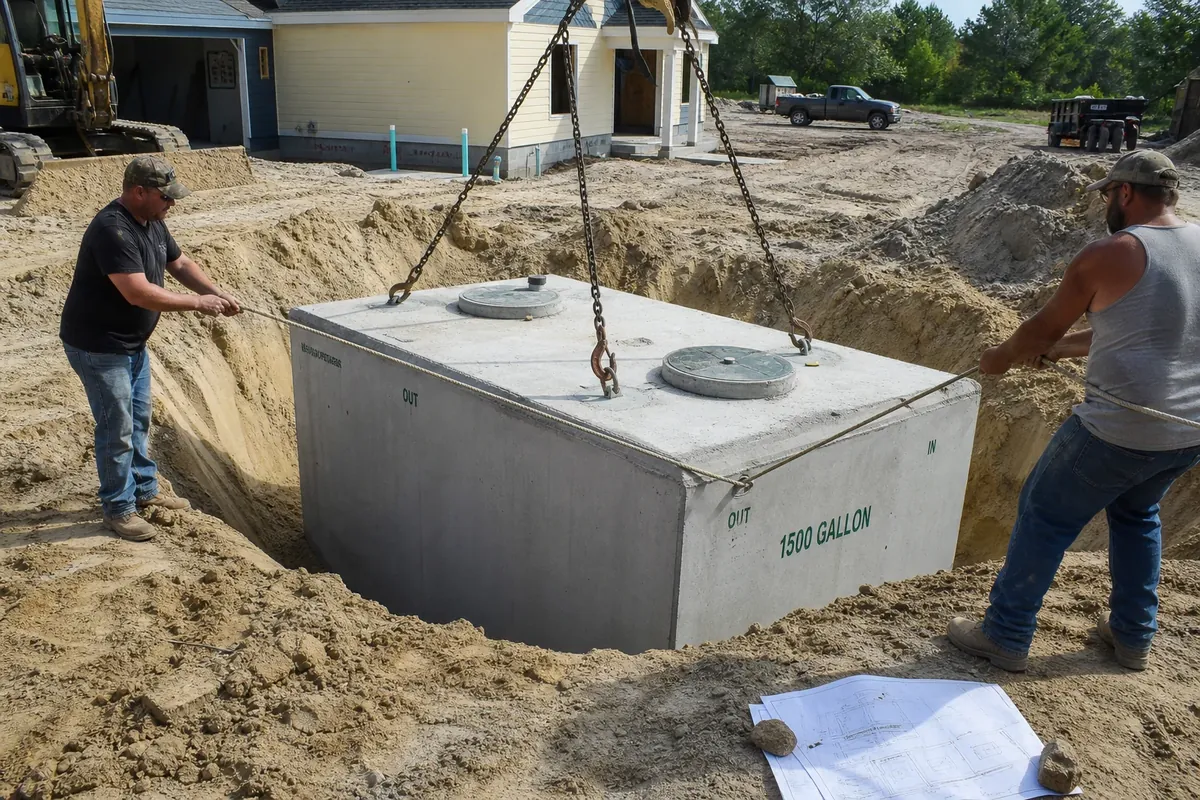
What Size Septic Tank Do I Need: Sizing Guide by Household
Undersized tanks lead to costly failures. This guide covers septic tank sizing by number of bedrooms, daily flow rates, and local code requirements.
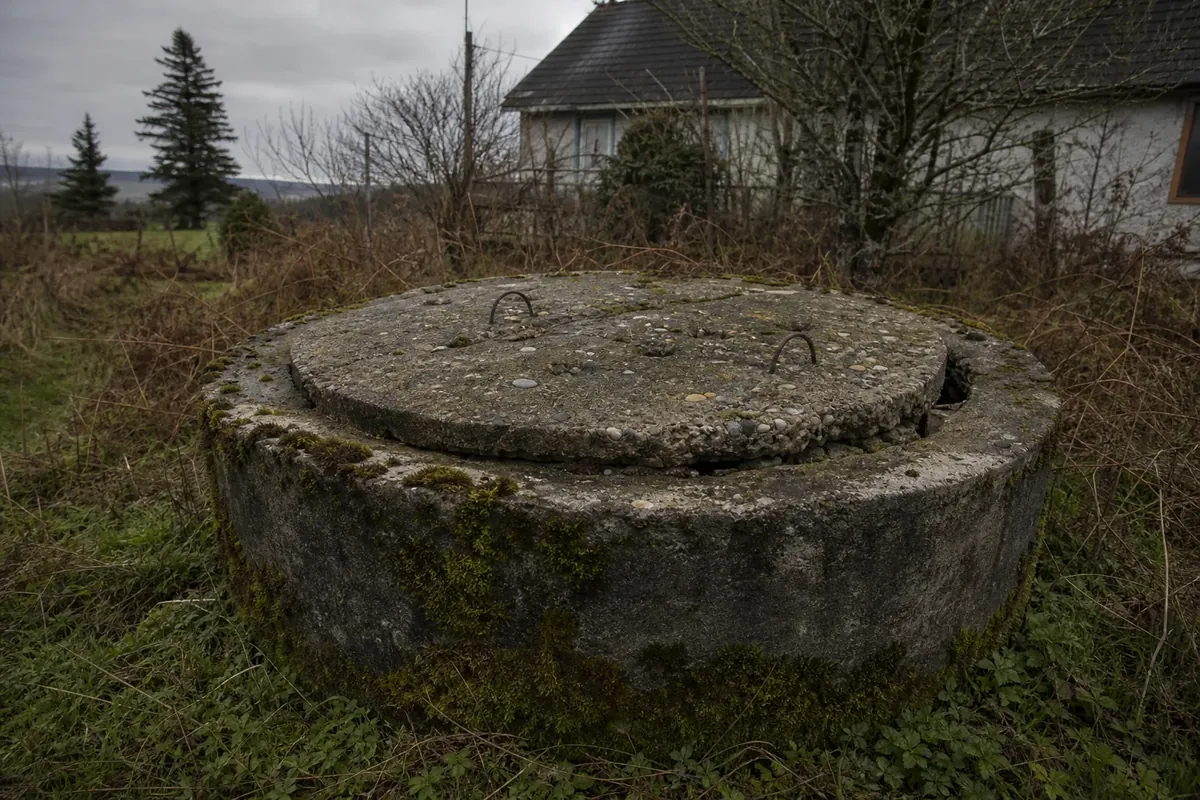
How Long Do Septic Tanks Last: Realistic Lifespan Expectations
Concrete tanks last 30 to 40 years, plastic tanks 20 to 30 years, and steel tanks 15 to 20 years.
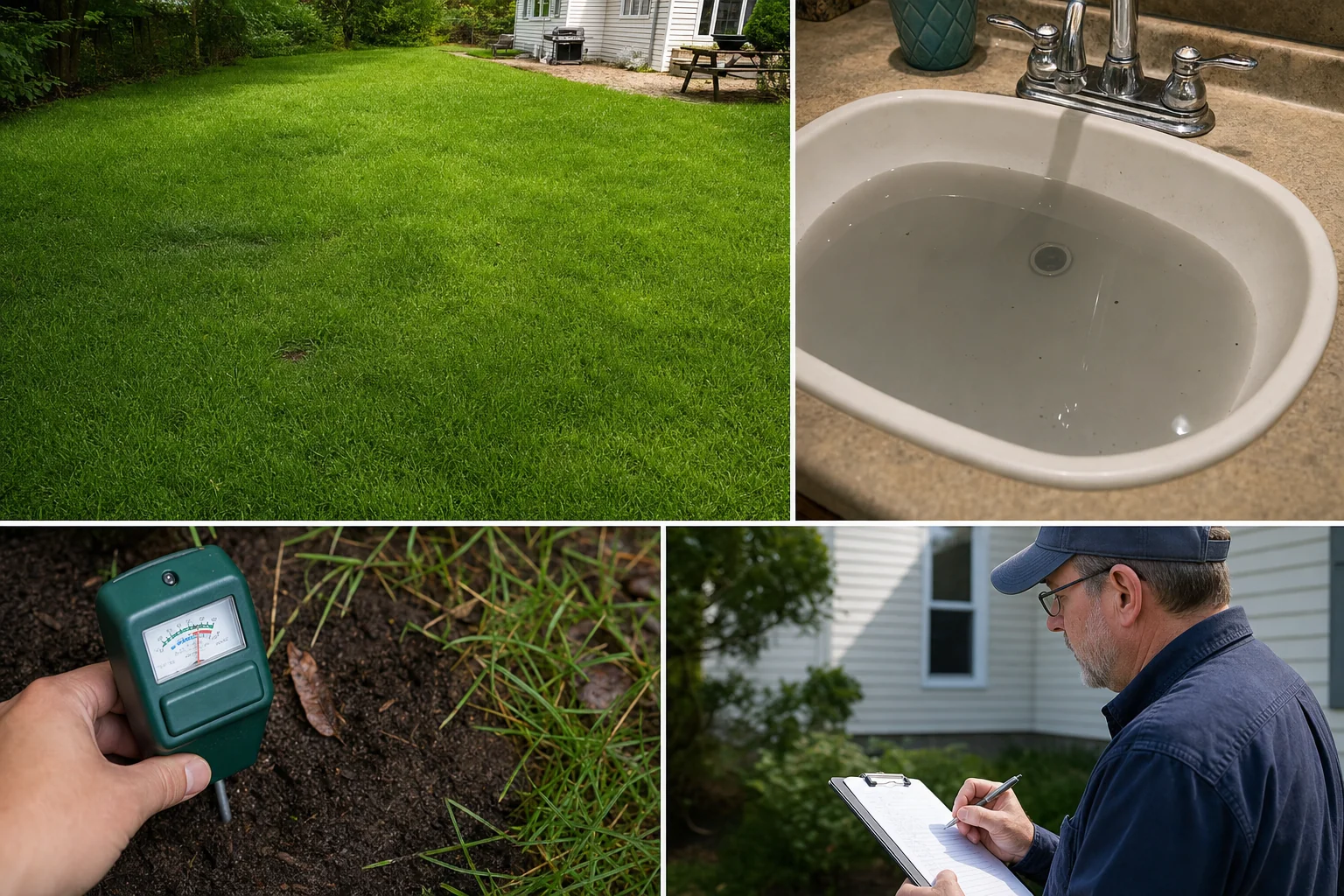
Signs Your Septic Tank Needs Pumping: Warning Flags Homeowners Miss
From slow drains to lush grass to sewage backup. The complete visual and physical symptom guide.
External Resources
Frequently Asked Questions
What happens to wastewater immediately after it leaves my house?
Wastewater leaves your house through the building sewer and flows downhill by gravity through a pipe toward the septic tank. No pumps or mechanical devices are needed for this initial stage because the entire septic system is designed around the natural force of gravity. The pipe enters the tank through the inlet baffle, which prevents the incoming stream from disturbing the settled layers inside the tank.
What are the three distinct layers that form inside a septic tank?
The three layers inside a functioning septic tank are the scum layer at the top, the liquid effluent layer in the middle, and the sludge layer at the bottom. The scum layer consists of fats, oils, grease, and lightweight solids that float and form a mat on the surface. The middle layer is partially clarified liquid containing suspended solids and bacteria in solution. The bottom sludge layer is composed of heavy inorganic solids, grit, and digested organic material that has fallen to the tank floor by gravity.
How do bacterial populations digest waste inside a septic tank?
Anaerobic bacteria in the tank break down organic solid waste through biological digestion, converting a portion of the sludge into liquids, gases, and a smaller volume of inert material. This bacterial digestion is a slow process that operates continuously as long as the tank conditions remain stable. The bacterial population naturally colonizes the tank without any additives or treatments from the homeowner. Regular pumping removes accumulated inert material that the bacteria cannot fully digest.
What is the function of the inlet baffle and outlet baffle in a septic tank?
The inlet baffle directs incoming wastewater downward below the liquid surface to prevent disturbing the scum layer and to direct the flow toward the center of the tank for optimal settling. The outlet baffle prevents the scum layer from escaping with the effluent and ensures that only the middle liquid layer exits toward the drain field. Both baffles are critical for maintaining separation between the three layers and extending drain field life by filtering out large particles.
What happens to effluent after it leaves the septic tank and enters the drain field?
Effluent flows by gravity from the outlet into a distribution box that divides the flow among multiple drain field trenches. Each trench contains perforated pipes laid in gravel that distribute the effluent across a wide area of soil. The soil acts as a biological filter, removing harmful bacteria, viruses, and nutrients as the water percolates downward. This final treatment step cleans the water before it reaches groundwater or subsurface water tables.
What warning signs indicate a septic tank is not working properly?
Warning signs of septic tank failure include slow draining fixtures across multiple areas of the home simultaneously, gurgling sounds from pipes when water runs, sewage odors inside the house or directly above the tank lid, standing water or unusually lush grass over the drain field area, and in severe cases, sewage backing up into the lowest drains in the home. These symptoms indicate the tank is full, the bacterial population is compromised, or the drain field is clogged and cannot accept more effluent.
Written by Mike Henderson
Mike Henderson is a certified septic system inspector with over 18 years of hands-on experience in wastewater management across Florida and the southeastern United States. He holds certifications from the National Association of Wastewater Technicians and regularly consults homeowners on preventing costly septic failures. His work has been referenced by regional health departments and home inspection agencies.