Every septic system owner eventually faces the same question: how are septic tanks cleaned, and what actually happens when the service technician arrives at your property? Understanding the professional cleaning process demystifies the service, helps you evaluate the quality of work performed, and gives you the knowledge to ask the right questions before and after the pump truck pulls into your driveway.
Septic tank cleaning is not a simple drain-dump operation. It is a multi-step process that removes all accumulated waste, inspects critical components, and prepares the tank to resume its normal function. The work requires licensed professionals, specialized equipment, and proper disposal at approved facilities. This guide walks through every stage of the process so you know exactly what to expect.
The Professional Septic Tank Cleaning Process
Professional septic tank cleaning follows a systematic sequence that experienced technicians complete on every service call. Understanding each step helps you recognize quality work and identify any shortcuts that could harm your system.
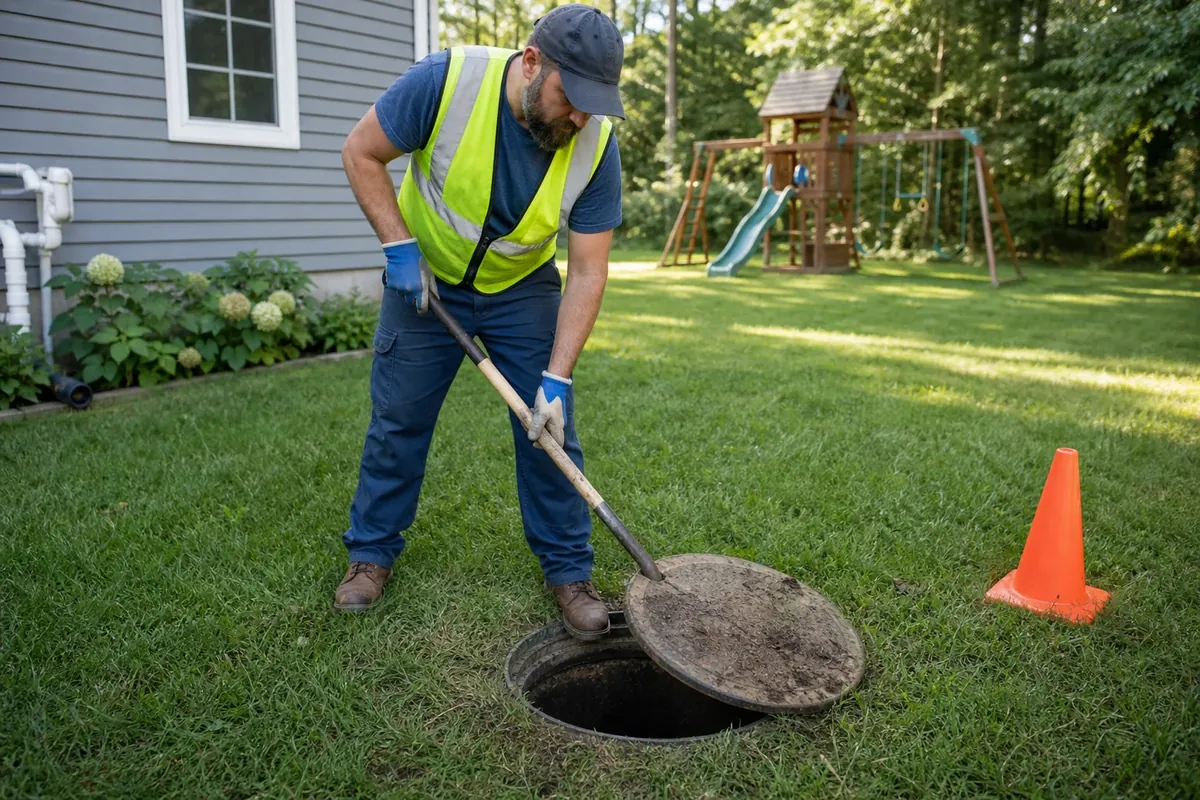
The process begins when the septic service technician arrives at your property. Before any equipment is activated, the technician will locate your tank by referencing the original installation records or using a probe to find the tank lid beneath the ground. If the lids are buried under soil, grass, or pavement, the technician uses hand tools or a small excavator to uncover them. This step is critical because a tank cannot be properly cleaned if all access ports are not exposed and visible.
Once the lids are exposed, the technician removes them and performs an initial visual inspection of the tank interior. Using a flashlight and sometimes a small mirror, the technician examines the condition of the inlet baffle, outlet baffle, and tank walls. This inspection reveals whether the baffles are intact, whether any cracks or structural issues exist, and how much accumulated sludge and scum are present. The technician records these observations on the service ticket.
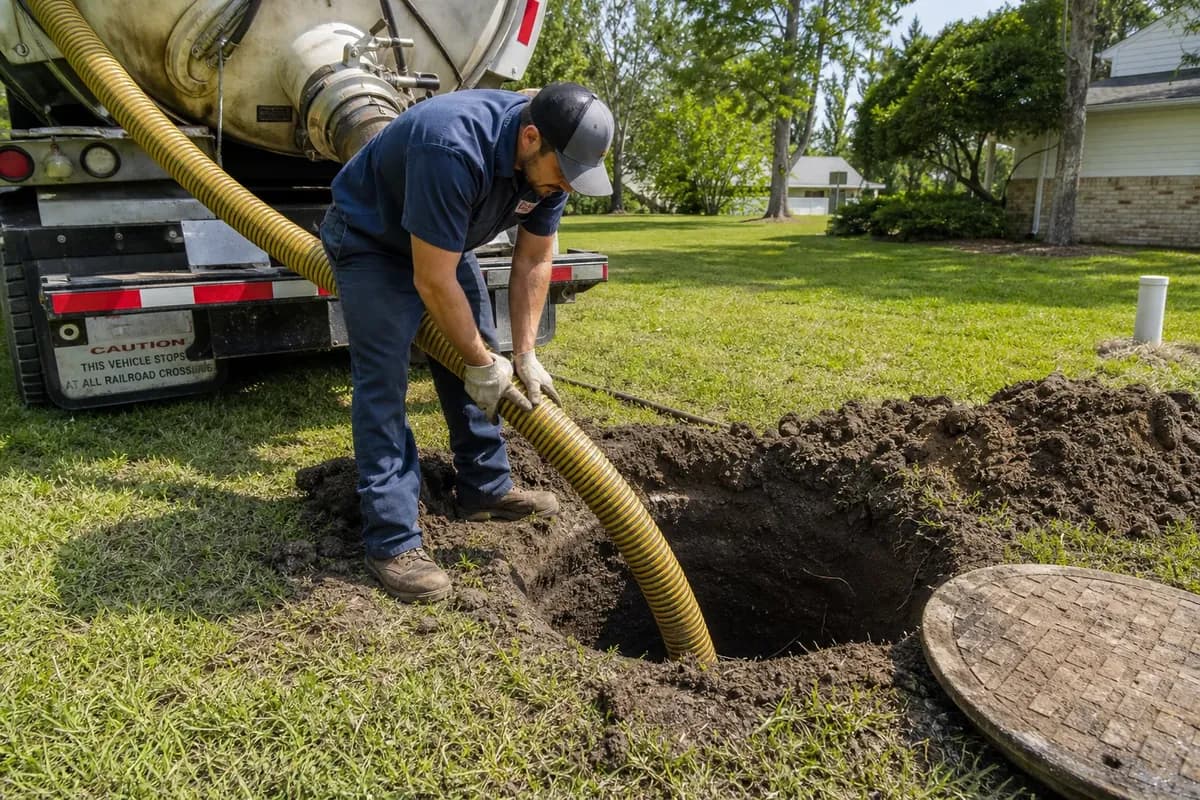
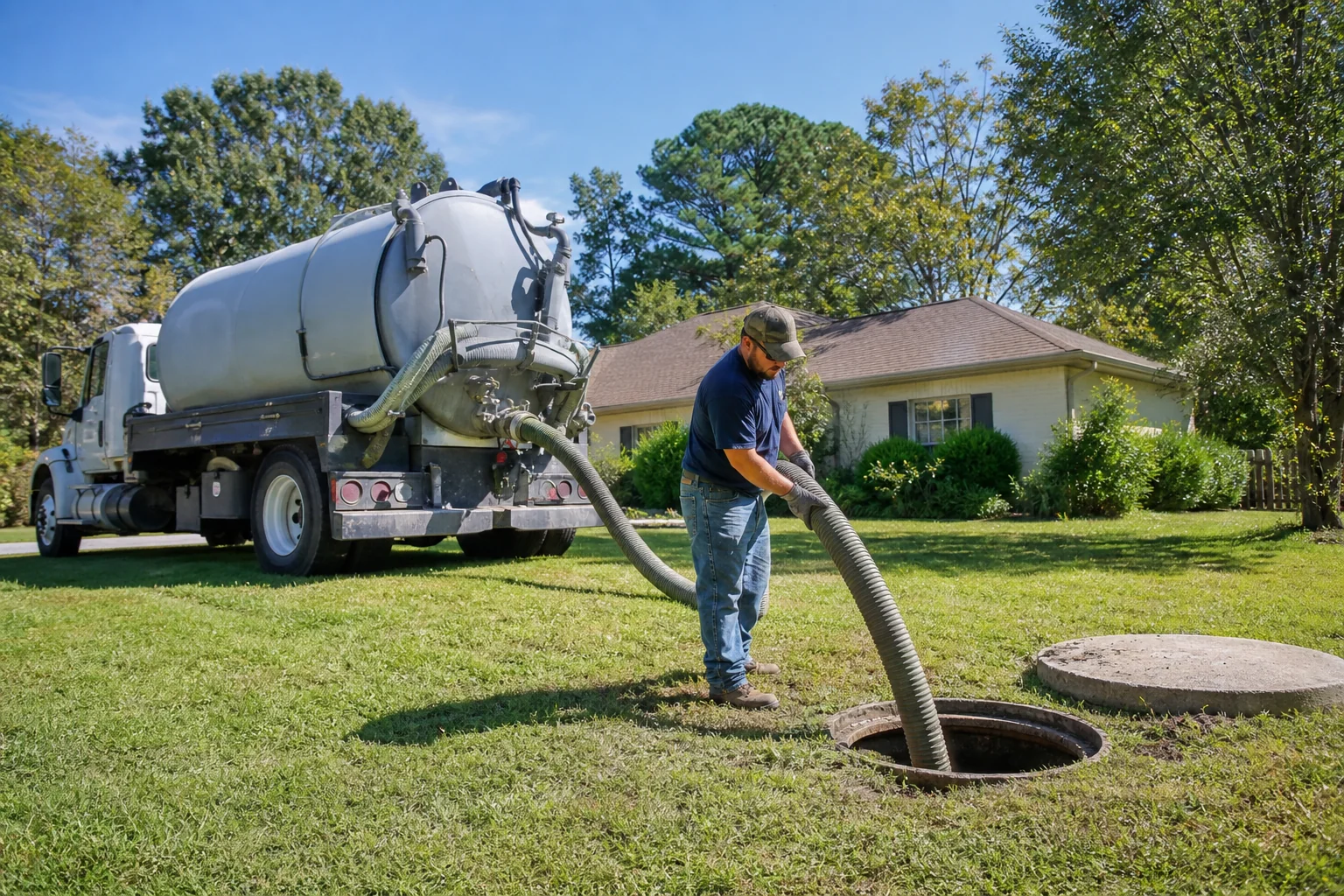
The pumping phase follows the inspection. A vacuum truck is positioned near the tank, and a large suction hose is inserted through the tank opening. The truck's powerful pump creates negative pressure that draws all liquid and solid material out of the tank. This includes the top layer of floating scum, the bottom layer of settled sludge, and the middle layer of partially clarified effluent. A complete cleaning removes all three layers, not just the liquid in between.
During the pumping phase, the technician may use a specialized baffle tool to dislodge any compacted solids that have adhered to the tank walls or accumulated around the baffles. This mechanical agitation breaks up dense sludge deposits that the vacuum alone cannot remove. The dislodged material is then vacuumed along with the rest of the tank contents.
After the tank is empty, the technician performs a post-pumping inspection to verify that all waste has been removed and to assess the interior condition more thoroughly now that the tank is accessible. The condition of the inlet and outlet pipes is checked, and any necessary repairs or recommendations are documented. Finally, the technician replaces the tank lids and backfills any excavation areas, leaving the site clean and the system ready to resume normal operation.
Equipment Used During Septic Tank Cleaning
Professional septic tank cleaning relies on equipment that most homeowners never see up close. Understanding what the service truck carries helps you appreciate why professional cleaning is a specialized trade and why the equipment cost factors heavily into the service price.
The vacuum truck is the centerpiece of the operation. These purpose-built vehicles contain a large cylindrical holding tank, a vacuum pump powered by the truck's engine, and a long network of hoses that reach from the truck into the septic tank. The vacuum pump generates enough suction to pull waste up to 50 feet horizontally and lift it several feet vertically. A typical vacuum truck used for residential septic service holds 1,000 to 3,000 gallons of waste material.
Baffle tools are long-handled implements that the technician lowers into the tank through the access opening. They feature specialized heads designed to scrape accumulated solids from tank walls, dislodge compacted sludge from around the inlet and outlet tees, and break up any debris that has collected in the tank. These tools are essential for a thorough cleaning because they reach areas that the suction hose alone cannot contact effectively.
Inspection cameras have become standard equipment for thorough septic service. A small waterproof camera mounted on a flexible cable is lowered into the empty tank after pumping. The technician views the interior on a monitor at ground level, identifying cracks, settling issues, baffle damage, and any signs of root intrusion or corrosion. Camera inspection adds diagnostic value to the cleaning and provides documentation for homeowners and inspectors.
Hand tools for excavation, including shovers, probes, and handheld compact excavators, are used when tank lids are not at the surface. Risers are sometimes installed at the time of cleaning to bring future access points closer to grade, eliminating excavation fees on subsequent service calls. You can learn more about the equipment and methods used during professional service by reviewing our complete cleaning maintenance guide.
What Gets Removed From Your Tank
A properly functioning septic tank separates incoming wastewater into three distinct layers through the natural process of gravity and microbial digestion. Each layer has a different composition, and a complete professional cleaning removes all three.
The bottom layer is called sludge, and it consists of solid waste particles that have settled out of the water column over time. Sludge is dense, semi-solid, and can accumulate to significant depth if the tank is not serviced regularly. It contains fecal matter, food particles, paper products that did not fully decompose, and other insoluble materials. In a neglected tank, sludge can occupy 50 percent or more of the tank's total volume, dramatically reducing its effective holding capacity and forcing solids into the drain field.
The top layer is called scum, and it floats on the surface of the liquid. Scum is composed of fats, oils, greases, soap residue, and lightweight solid particles that buoyant up from the water column. This layer can be surprisingly thick, sometimes several inches deep, and it insulates the tank from oxygen exchange. A thick scum layer actually benefits the tank's internal chemistry by limiting oxygen transfer, but an excessively thick layer can eventually breach the outlet baffle and carry solids directly into the drain field.
The middle layer is effluent, which is the partially treated liquid that sits between the sludge and the scum. Effluent is relatively clear by the time it reaches the outlet baffle because the heaviest solids have settled to the bottom and the lightest materials have risen to the top. This is the layer that flows out of the tank and into the drain field for final treatment by the soil. When you schedule a pumping service, all three layers are removed to restore the tank to its full functional capacity.
DIY vs Professional Septic Tank Cleaning
Some homeowners ask whether they can clean their septic tank themselves to save money. This question deserves a direct answer grounded in practical reality and regulatory compliance.
Septic tank cleaning cannot be performed as a do-it-yourself project. The vacuum equipment required to pump a tank is not available to consumers through equipment rental stores, and even if it were, the disposal of the extracted waste is heavily regulated by federal, state, and local environmental authorities. Homeowners who attempt to pump their own tanks risk serious health hazards from exposure to pathogens, legal penalties for unauthorized waste disposal, and property damage from incomplete or improper pumping that leaves solidified waste in the tank.
What homeowners can do between professional cleanings is practice maintenance habits that extend the interval between services and keep the system functioning optimally. These maintenance activities are covered in detail in our how to clean your septic tank guide, which focuses on the ongoing care tasks that do not require a professional service truck. The distinction between daily maintenance and periodic professional pumping is important to understand, and both are essential for long-term system health.
Choosing a professional septic service provider also brings the benefit of a trained eye evaluating your system during every visit. Experienced technicians identify problems like cracked baffles, root intrusion, pipe damage, and drain field saturation early, often before they become expensive emergencies. Building a relationship with a reliable local septic service company gives you a trusted advisor who knows your system's history and can provide personalized maintenance recommendations.
Cost Factors for Septic Tank Cleaning
The price of professional septic tank cleaning varies based on several factors that homeowners should understand before requesting quotes from service providers. Knowing these factors helps you evaluate whether a quoted price is reasonable and what you are actually paying for.
Tank size is the primary cost driver. Larger tanks contain more waste volume, which requires more time for the vacuum truck to fill and more disposal volume at the treatment facility. A standard 1,000-gallon tank serving a typical three-bedroom home falls in the moderate price range, while tanks of 1,500 gallons or larger cost proportionally more to clean. You can review our detailed pumping cost guide for specific price ranges by tank size and region.
Accessibility of the tank lids significantly affects the final price. Tanks that are buried beneath driveways, patios, decks, or more than 12 inches of soil require excavation before the pumper can insert the vacuum hose. Excavation adds labor time and sometimes equipment rental fees to the job. Installing septic risers at the time of service permanently solves the accessibility problem for all future cleanings and is a worthwhile investment for properties where the tank is not already at grade.
Geographic location influences the price through local disposal fees, fuel costs, and market competition. Urban and coastal markets typically have higher disposal fees and higher labor costs than rural or inland areas. Properties located far from the service company's home base may incur travel surcharges to compensate for drive time and fuel. Scheduling during weekdays rather than weekends or holidays generally results in lower rates because demand is lower.
Additional services bundled with the cleaning, such as camera inspection, baffle repair, filter cleaning, or root treatment, add to the total invoice. These add-ons provide diagnostic value and can prevent costly future repairs, so they are often worth the extra investment. Always request an itemized quote that separates the base pumping price from any additional services so you can make an informed decision about which add-ons to accept.
What Happens to Waste After Pumping
Homeowners are sometimes curious about what happens to the waste after it is extracted from their septic tank. Understanding the disposal process reinforces why professional service is the only appropriate method for septic cleaning and why the disposal fees charged by service companies are a necessary part of the process.
The vacuum truck transports the extracted waste directly from your property to a licensed wastewater treatment facility or a permitted land application site. At the treatment facility, the waste is processed through settling tanks, biological treatment systems, and disinfection stages that remove pathogens, reduce organic content, and separate any remaining solid materials. The treated effluent is then discharged according to the facility's permit, either to a surface water body or through spray irrigation onto controlled land application areas.
Some rural areas use land-based disposal where the waste is applied to permitted fields under controlled conditions. The organic material acts as a soil amendment and fertilizer, and the nutrients are absorbed by growing plants. This method has been used for decades in agricultural regions and is considered an appropriate end use for properly treated septic waste when conducted under regulatory oversight.
The disposal fees charged on your service invoice reflect the actual cost that the septic company pays the treatment facility or disposal site. These fees are set by the receiving facility and are passed through to the customer at cost in most cases. Companies that advertise unusually low pumping prices but add high disposal surcharges are effectively hiding the true cost, which is why requesting an all-inclusive quote before scheduling service is always the best practice.
Maintenance Tips Between Professional Cleanings
The interval between professional cleanings depends heavily on how the system is used and maintained between service calls. Homeowners who adopt consistent maintenance habits routinely extend their pumping intervals from two to three years to four or five years, which significantly reduces lifetime ownership costs while protecting the drain field from premature failure.
Monthly bacterial septic treatments are the single most effective habit for reducing solids accumulation. These products introduce concentrated strains of beneficial bacteria and natural enzymes into the tank, where they accelerate the decomposition of solid waste. Over time, this biological activity keeps the sludge layer thinner and the scum layer less dense, meaning more of the tank's capacity remains available for water storage and treatment. Browse our septic tank treatment guide for product recommendations and application instructions.
Water conservation directly affects how quickly the tank fills and requires pumping. Every gallon of water that enters the septic system from laundry, showers, dishwashing, and toilets carries solid and dissolved waste that occupies tank volume. Fixing leaky faucets promptly, installing high-efficiency appliances, spacing out heavy laundry days, and avoiding large-volume water uses like filling pools or hot tubs through household drains all reduce the hydraulic load on the tank and extend the time between pumpings.
What goes down your drains has a direct effect on tank contents and pumping frequency. Avoid flushing anything other than human waste and toilet paper. Feminine hygiene products, dental floss, cotton swabs, cigarette butts, and cooking grease all accumulate in the tank as indigestible material that the bacterial populations cannot break down. Grease poured down the kitchen drain solidifies in the tank and contributes to an excessively thick scum layer that can overwhelm the outlet baffle. Following a proper pumping schedule ensures your system is serviced before problems develop.
Protecting the drain field is the most important downstream maintenance goal. The drain field is the final treatment stage where effluent is filtered and purified as it percolates through soil. Compacted soil, vehicle traffic over the drain field area, planting trees or shrubs with deep root systems nearby, and directing roof runoff or surface water toward the drain field all cause physical damage or hydraulic overload that shortens its functional lifespan. Keep the drain field area clear, well-drained, and free from heavy loads to get the maximum service life from your entire septic system. Our septic problems resource covers common drain field issues and how to address them.
Related Articles
How Often Should You Empty a Septic Tank: The Real Answer
The pumping frequency your septic tank needs depends on household size, tank capacity, water usage, and whether you have a garbage disposal.
How Much Is Septic Tank Cleaning: Real Prices for 2025
Complete breakdown of septic tank cleaning costs by tank size, location, and service type.
Signs Your Septic Tank Needs Pumping: Warning Flags Homeowners Miss
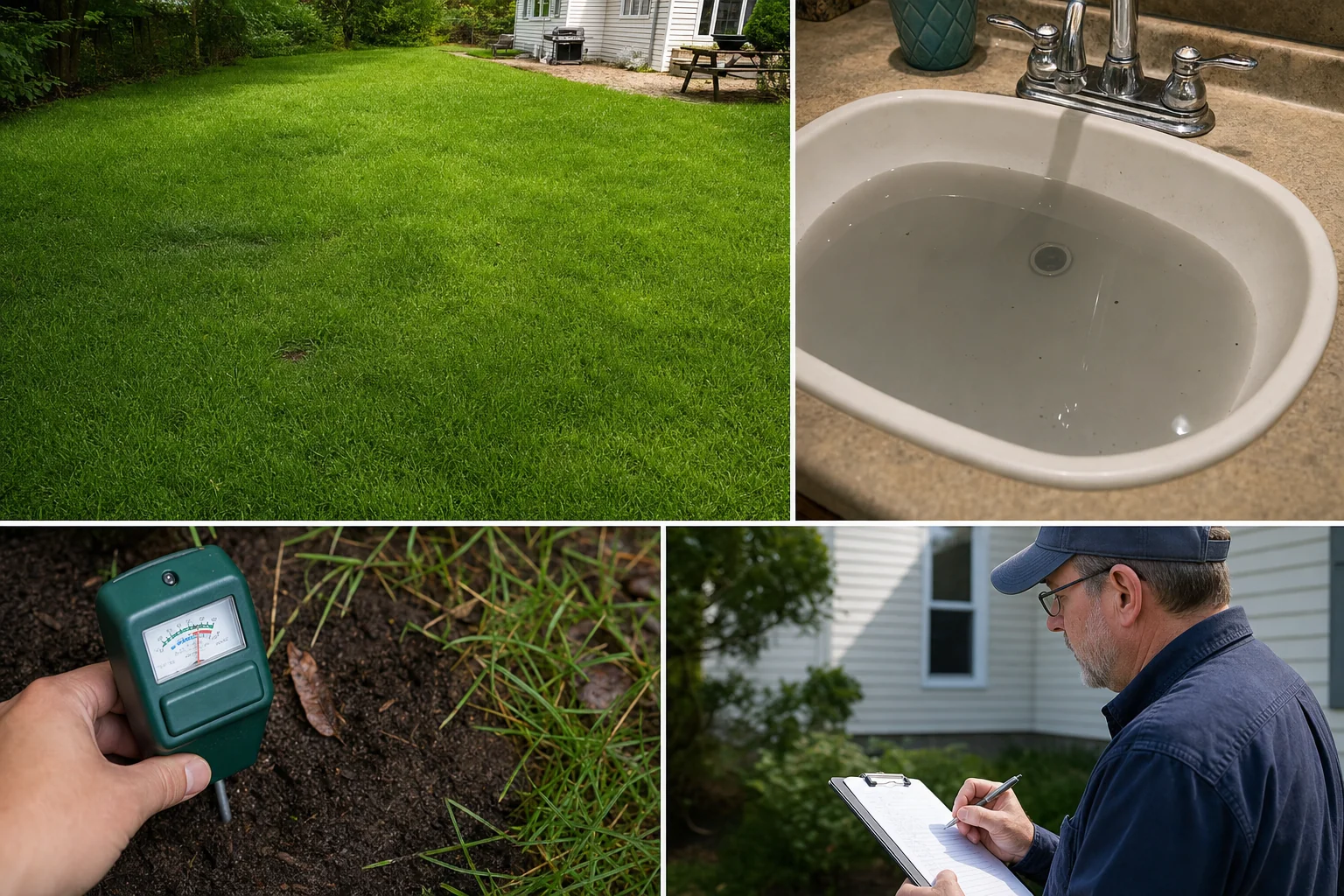
From slow drains to lush grass to sewage backup. The complete visual and physical symptom guide.
External Resources
Frequently Asked Questions
How are septic tanks cleaned by professionals?
Professionals clean septic tanks using a vacuum truck that pumps out all liquid, sludge, and scum layers from the tank. The technician locates and excavates the tank lids, inserts a high-volume suction hose, and removes all accumulated waste before inspecting the interior baffles and components.
What equipment is used to clean a septic tank?
The primary equipment is a vacuum truck with a large holding tank, a powerful suction pump, and a long hose system. Technicians also use baffle tools to dislodge compacted solids, a camera for visual inspection, and hand tools for uncovering buried lids.
How often should a septic tank be professionally cleaned?
Most residential septic tanks require professional cleaning every one to three years depending on household size, tank capacity, and daily water usage. Homes with garbage disposals or older systems may need annual service.
Can I clean my septic tank myself instead of hiring a professional?
No. Septic tank cleaning requires specialized vacuum trucks and equipment that homeowners cannot rent or operate. Attempting DIY cleaning is dangerous, illegal in most municipalities, and risks contaminating your property and groundwater.
What happens to the waste after it is pumped from the septic tank?
The waste is transported by the service truck to a licensed wastewater treatment facility or permitted disposal site. There it is processed, treated, and disposed of according to local environmental regulations.
What maintenance should I perform between professional cleanings?
Between professional cleanings you should use bacterial septic treatments monthly, avoid flushing non-biodegradable products, conserve water during heavy-use periods, inspect the inlet and outlet baffles annually, and have the drain field evaluated every three to five years.
Written by Mike Henderson
Mike Henderson is a certified septic system inspector with over 18 years of hands-on experience in wastewater management across Florida and the southeastern United States. He holds certifications from the National Association of Wastewater Technicians and regularly consults homeowners on preventing costly septic failures. His work has been referenced by regional health departments and home inspection agencies.