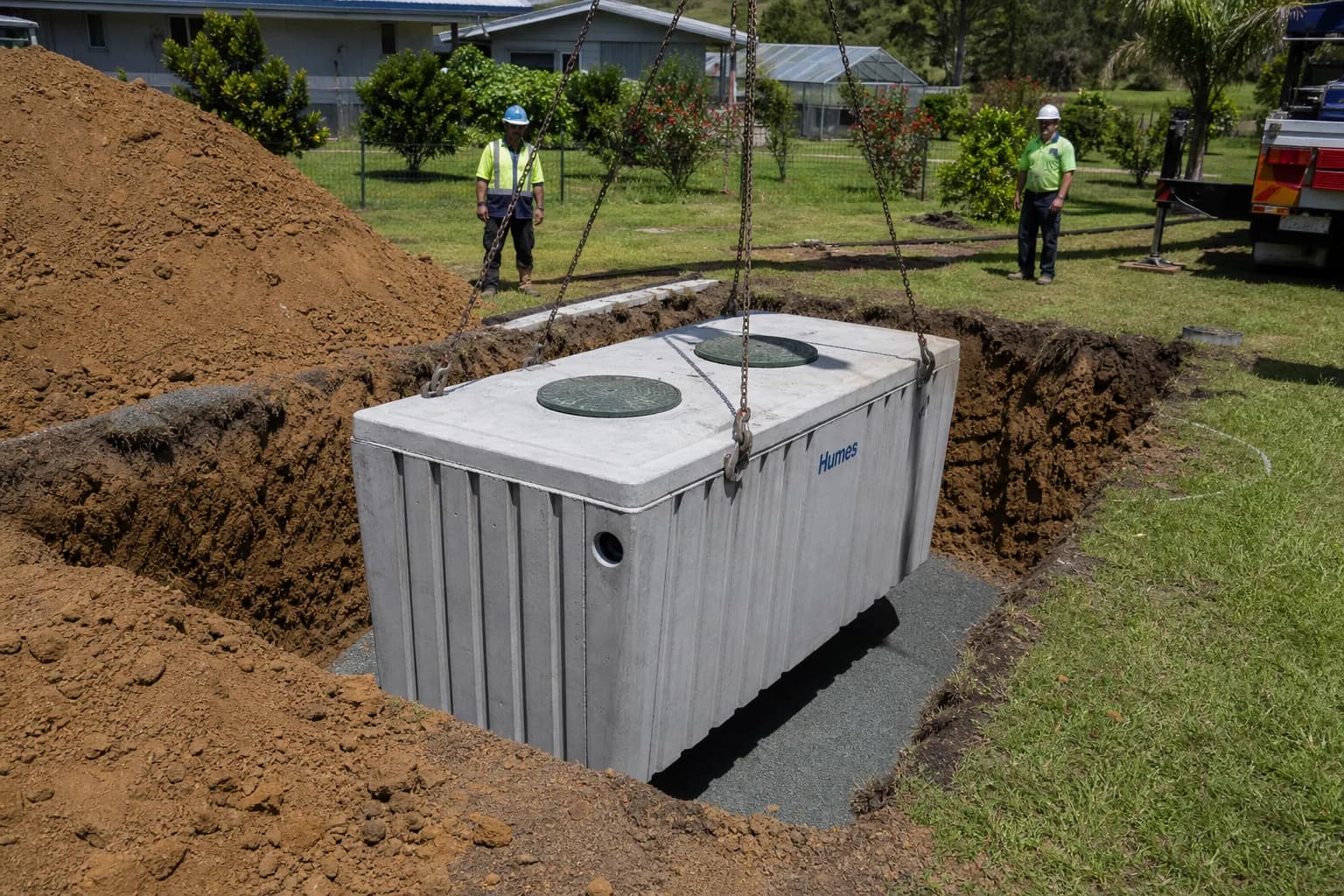
Concrete septic tanks have been the standard choice for residential wastewater treatment for over a century, and for good reason. The combination of concrete's strength, durability, and resistance to the harsh underground environment makes it an exceptionally reliable material for containing sewage. While newer materials like fiberglass and polyethylene have entered the market, concrete remains the most widely installed septic tank material across North America, particularly in areas where heavy soil conditions, high water tables, or vehicle traffic above the tank require a robust solution.
Homeowners Are Ditching Pumping Trucks After Seeing This
Watch this short video to discover the unusual method homeowners are using to dissolve solid waste, destroy foul odors, and keep drain fields flowing freely. No harsh chemicals. No service calls. It takes seconds and works while you sleep.
Watch the Free Video NowWhat Is a Concrete Septic Tank: Construction and Design
A concrete septic tank is a watertight chamber constructed from reinforced concrete that receives and begins treating wastewater from a residential building. The tank is designed with an inlet baffle at one end and an outlet baffle at the other, which direct flow through the tank while preventing settled solids from escaping. Most residential concrete tanks hold between 1,000 and 1,500 gallons, though larger tanks are available for commercial applications or homes with high water usage.
Precast concrete tanks are manufactured at a plant and transported to the installation site, where a crane lowers them into the excavated hole. The precast process allows for strict quality control during manufacturing, including the use of high-strength concrete mixes, proper curing time, and integrated reinforcement with steel rebar or wire mesh. The tank walls are typically 3 to 6 inches thick, depending on the tank size and manufacturer specifications, which provides the structural strength needed to withstand burial and the pressure of surrounding soil.
Concrete tanks are available in both single-compartment and two-compartment designs. Single-compartment tanks have one large chamber where all settling occurs, while two-compartment tanks are divided by a wall with openings that allow liquid to flow into the second compartment for additional settling. Two-compartment designs generally produce better effluent quality and extend drain field life, which is why many local building codes now require them for new installations.
Benefits of Concrete Septic Tanks: Why Homeowners Choose Concrete
The primary advantage of concrete septic tanks is their exceptional durability and structural integrity. Unlike plastic tanks that can deform under pressure or float upward in saturated soil, concrete tanks have the mass and strength to resist ground pressure from heavy vehicles, frost heave, and soil settlement over decades of service. This structural stability means concrete tanks are less likely to develop leaks or cracks from external forces, providing more reliable containment of wastewater over the long term.
Concrete is an inert material that resists degradation from common household chemicals, temperature extremes, and UV exposure. Once buried, concrete tanks are protected from sunlight and temperature fluctuations, and the naturally alkaline nature of concrete actually inhibits the growth of some types of corrosive bacteria. The material does not degrade when exposed to hot water from washing machines or dishwashers, which can be a concern with certain plastic tank designs.
The longevity of concrete tanks is another significant benefit for homeowners making a long-term investment in their property. While plastic tanks typically last 20 to 30 years, concrete tanks routinely exceed 30 to 40 years of service, with many lasting 50 years or more when properly maintained. This extended lifespan can represent significant savings over time, as the cost of tank replacement is avoided.
Concrete tanks also offer excellent resistance to buoyancy in areas with high water tables. The weight of a full concrete tank, combined with the friction between the tank walls and surrounding soil, anchors it firmly in place. This is particularly important in coastal areas, regions with seasonal flooding, or properties with naturally high water tables where lighter plastic tanks may require additional anchoring systems to prevent flotation.
Potential Drawbacks: What to Consider Before Choosing Concrete
The weight of concrete tanks is both an advantage and a disadvantage. A typical 1,000-gallon concrete tank weighs between 6,000 and 8,000 pounds when empty, requiring specialized heavy equipment for transport and installation. This adds significant cost to the installation process and limits placement options in areas with limited access for construction equipment. In remote locations or yards with limited clearance, getting a crane or backhoe to the installation site may be challenging or impossible.
The cost of concrete tanks is higher than plastic alternatives, both for the tank itself and for the installation labor. Precast concrete tanks typically cost 50% to 100% more than comparable polyethylene tanks, and the installation may require more extensive excavation due to the larger footprint of some concrete tank designs. For budget-conscious homeowners or those with easy access to the installation site, this cost difference may be a significant factor.
Concrete is a porous material by nature, which creates some unique challenges for septic tank applications. Over time, concrete can develop small cracks that allow water to seep through, and the porous surface provides potential entry points for tree roots. While most concrete tanks are treated with waterproof coatings to reduce porosity, these coatings can degrade over time and may need reapplication during the life of the tank.
The environmental footprint of concrete production is higher than that of plastic alternatives due to the energy-intensive process of manufacturing cement and the extraction of raw materials. However, the longevity of concrete tanks can offset this initial impact over time, and concrete is recyclable at the end of its service life. For homeowners prioritizing sustainability, the extended lifespan of concrete tanks may justify the higher initial environmental cost.
Installation Considerations: What Homeowners Need to Know
Installing a concrete septic tank requires careful site preparation and professional expertise. The excavation must be sized to provide adequate clearance around the tank for backfilling and must be deep enough to maintain the proper slope from the building sewer to the tank inlet. The bottom of the excavation should be flat and level to ensure the tank sits uniformly without stress points that could cause cracking over time.
Proper backfilling is critical for concrete tank installations. The material used for backfilling should be free of large rocks, debris, and frozen material, and should be placed in layers that are compacted uniformly around the tank. Uneven backfilling can create point loads on the tank walls that lead to cracking. Many installers prefer to backfill with gravel or sand to ensure good drainage around the tank, which reduces the risk of water saturation and buoyancy issues.
Access to the tank for future pumping and inspection must be considered during installation. The risers that extend the tank lids to ground level should be properly sealed to prevent infiltration of stormwater and should be fitted with secure lids that can support foot traffic. Improperly installed risers are a common source of leaks and can allow significant volumes of rainwater to enter the tank, which overloads the drain field and accelerates the need for pumping.
Local building codes and health department regulations often specify minimum tank size, baffle requirements, setback distances from wells and property lines, and soil conditions that must be met before installation. Working with a licensed septic system installer who is familiar with local requirements ensures that your system meets all applicable standards and will pass required inspections. Our installation guide covers the regulatory framework and best practices for new septic system installations.
Maintenance Requirements: Protecting Your Investment Over Decades
Concrete septic tanks require the same fundamental maintenance practices as all septic systems: regular pumping, periodic inspection, and responsible use habits. The pumping frequency for a concrete tank depends on household size, tank capacity, water usage, and the presence of a garbage disposal. Most households should schedule pumping every 3 to 5 years, though homes with high water usage or garbage disposals may need more frequent service.
Inspection of concrete tanks should include checking the condition of inlet and outlet baffles, examining the tank walls and floor for visible cracks or signs of leakage, and assessing the condition of seals around access lids and risers. Small cracks in concrete can often be repaired with epoxy injection or waterproof sealants before they develop into larger problems that require tank replacement. Professional inspectors use video cameras to examine the interior of tanks that are difficult to access visually.
Protecting concrete tanks from chemical damage is an often-overlooked aspect of maintenance. While concrete is generally resistant to household chemicals, certain substances can accelerate degradation. Extremely acidic or alkaline waste, petroleum products, large volumes of bleach, and solvents can all damage concrete over time. Avoiding these materials in drains connected to the septic system helps extend tank life. Our additives guide explains which products are safe for septic systems and which should be avoided.
Managing vegetation over and around the tank is important for concrete tank longevity. Trees should be planted at sufficient distance from the tank to prevent root intrusion, which is one of the most common causes of concrete tank damage. Shallow-rooted grasses and groundcovers are generally safe for planting above the tank and drain field, but deep-rooted plants and trees should be kept at distances recommended by a landscaping or septic professional based on the mature root spread of the species.
Concrete vs. Other Tank Materials: Making an Informed Comparison
When selecting a septic tank material, homeowners typically choose between concrete, polyethylene (plastic), and fiberglass. Each material has distinct characteristics that make it better suited to certain applications and installation conditions. Understanding these differences helps homeowners make decisions that will serve their property well over the decades-long lifespan of the system.
Polyethylene tanks are lightweight and easy to transport, making them ideal for sites with limited access or properties where heavy equipment cannot reach the installation location. They are completely watertight and resistant to corrosion and are not susceptible to root intrusion. However, polyethylene tanks can deform under heavy backfill pressure, may float in high water table conditions without proper anchoring, and have a shorter expected lifespan than concrete. Our plastic septic tank guide covers these tanks in detail.
Fiberglass tanks offer a middle ground between concrete and plastic, with better structural rigidity than polyethylene and lighter weight than concrete. They are completely watertight, resistant to corrosion and root intrusion, and do not float as readily as plastic tanks when properly ballasted. Fiberglass tanks are more expensive than both concrete and plastic options, which limits their market share in residential applications.
For most residential applications, concrete remains the material of choice in areas where heavy equipment access is available and soil conditions warrant the additional cost. The initial investment in a concrete tank pays dividends over time through extended service life, superior structural performance, and resistance to the specific challenges of the underground environment. The 1000 gallon septic tank guide covers the most common tank sizing for residential use.
Related Articles
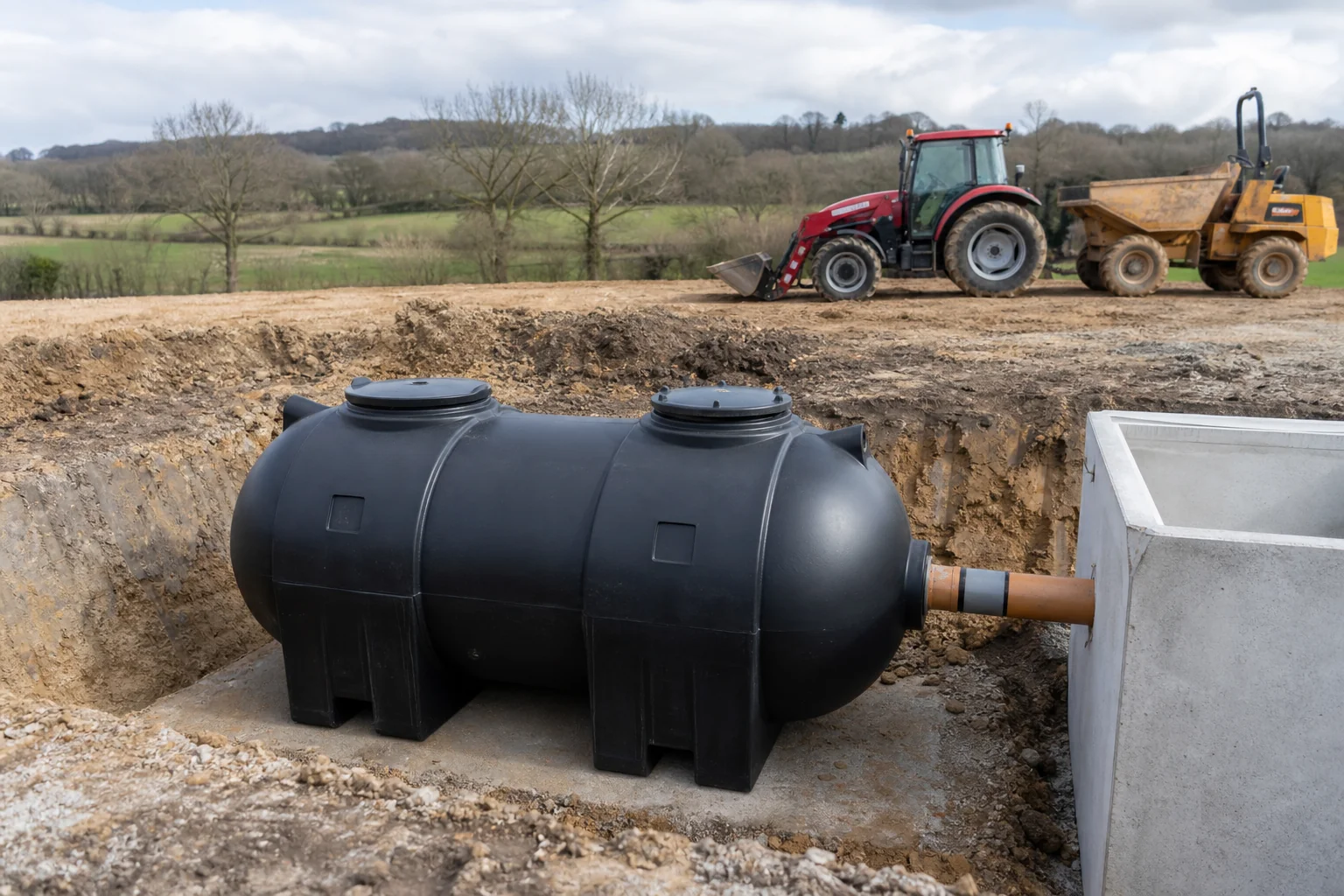
Plastic Poly Septic Tanks: Lightweight Alternatives
How plastic septic tanks work, their advantages and disadvantages, and when they might be the better choice for your property.
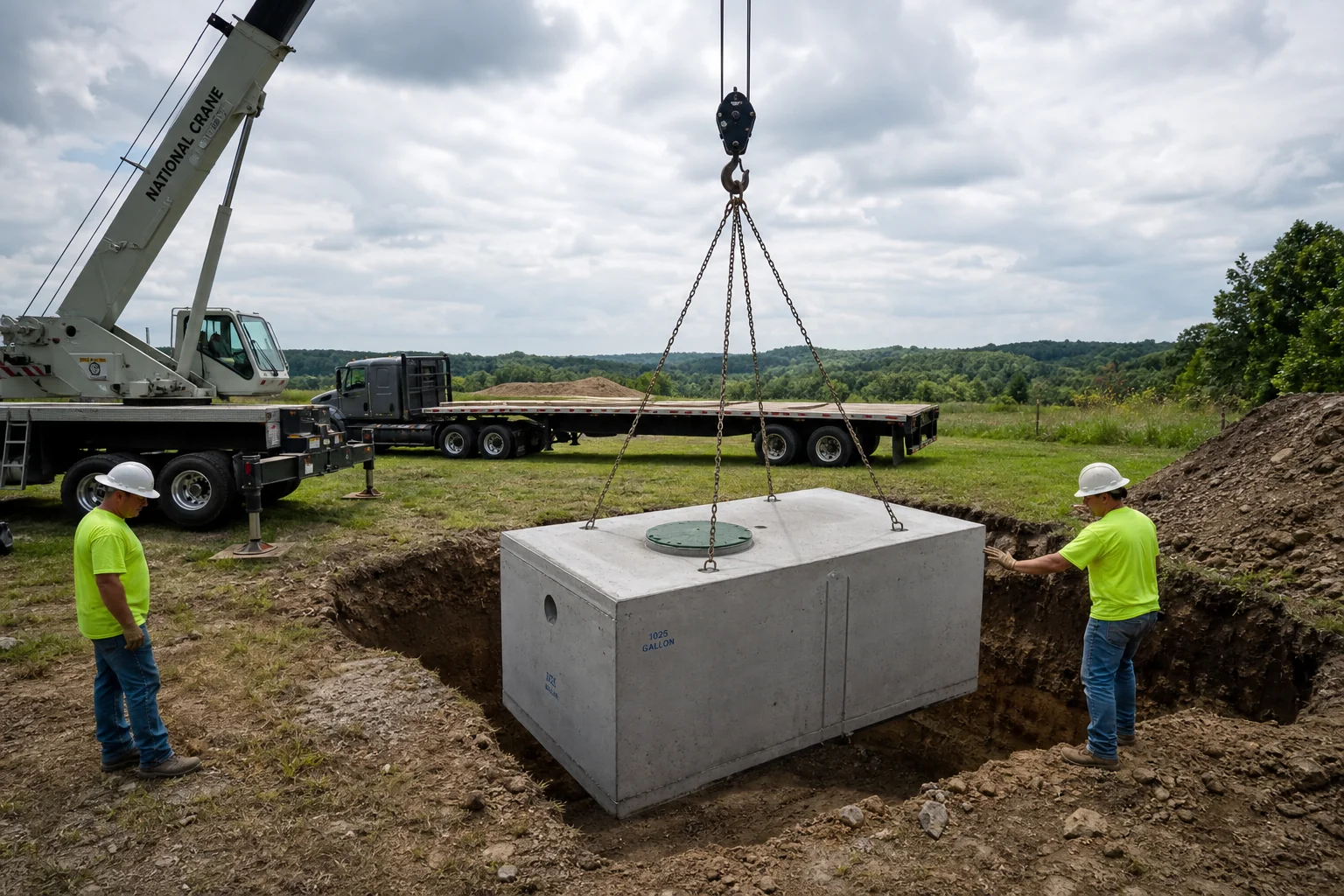
1000 Gallon Septic Tank: The Most Common Residential Size
Why the 1000 gallon tank is the standard for single-family homes, sizing calculations, and what determines capacity requirements.
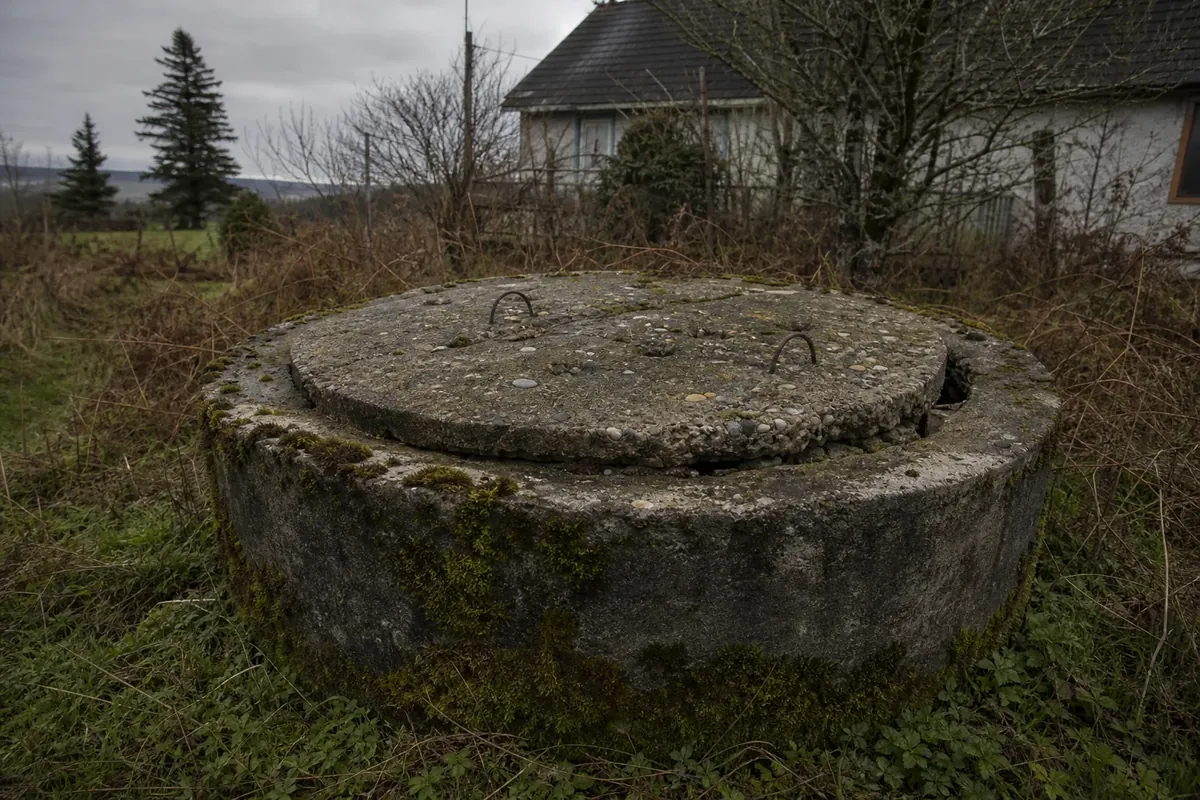
How Long Do Septic Tanks Last: Realistic Lifespan Expectations
Comparing lifespans across tank materials including concrete, plastic, and steel, and the factors that affect longevity.
External Resources
Frequently Asked Questions
How long do concrete septic tanks typically last?
Concrete septic tanks have an expected lifespan of 30 to 40 years, and many continue functioning well beyond 40 years with proper maintenance. The longevity depends on concrete quality, installation quality, soil conditions, and maintenance frequency.
What are the main advantages of concrete septic tanks over plastic tanks?
Concrete tanks offer superior durability and resistance to buoyancy, meaning they are less likely to float in wet soil conditions. They withstand ground pressure and heavy loads better, resist damage from roots, and are generally considered more permanent solutions for wastewater treatment.
What are the disadvantages of concrete septic tanks?
Concrete tanks are significantly heavier, requiring specialized equipment for transport and installation. They are more expensive to purchase and install. Over time, concrete can crack due to ground movement or freeze-thaw cycles, and the porous nature of concrete can allow roots to penetrate.
How do I maintain a concrete septic tank?
Regular pumping every 3 to 5 years, periodic inspection of baffles and inlet/outlet conditions, avoiding harsh chemicals that can damage concrete, and monitoring for signs of cracking or leaks. Professional inspections can identify structural issues before they become serious problems.
Can tree roots damage concrete septic tanks?
Yes, tree roots can penetrate concrete septic tanks, especially through small cracks or joints. Root intrusion is more common in older concrete tanks with weaker seals. Maintaining proper tank integrity and keeping trees at safe distances during landscaping helps prevent root damage.
Are concrete septic tanks environmentally friendly?
Concrete is made from natural materials (limestone, sand, gravel) and has a low environmental impact during production compared to some synthetic alternatives. The longevity of concrete tanks means fewer replacements over time, reducing cumulative resource consumption.
Written by Mike Henderson
Mike Henderson is a certified septic system inspector with over 18 years of hands-on experience in wastewater management across Florida and the southeastern United States. He holds certifications from the National Association of Wastewater Technicians and regularly consults homeowners on preventing costly septic failures. His work has been referenced by regional health departments and home inspection agencies.